
Does following a Mediterranean diet reduce mortality?
Does the Mediterranean diet really influence our longevity? A new Australian study has compared its effects with those of a conventional diet in order to measure its impact on mortality.


The main principles of the Mediterranean diet
Known for being as healthy as it is sunny and colourful, the Mediterranean diet, or Cretan diet, is based on eating fresh, seasonal and local foods (1).
It is characterised by:
- a strong emphasis on plant-based foods (fruit, vegetables, nuts, cereals) and olive oil
- moderate consumption of fish and poultry
- a low proportion of dairy products (mainly yoghurt and cheese), red meat, charcuterie and sweet treats
- moderate consumption of red wine with meals
Based on the traditional eating habits of the countries of the Mediterranean basin, this dietary model is attracting growing interest in anti-ageing research.
In particular, the Mediterranean diet has been the subject of numerous scientific studies, which have highlighted its benefits for cardiovascular health (2).
In a recent report, the World Health Organisation also highlighted the fact that this type of diet is associated with a reduced risk of cancer, cognitive and cardiovascular disease, as well as preventing obesity and type 2 diabetes (3).
The Mediterranean diet was even included on the 2013 UNESCO World Heritage List of the Intangible Cultural Heritage of Humanity.
Mediterranean diet and mortality: the results of a recent Australian study
A study conducted in Australia and published in 2025 in The Journal of Nutrition examined the link between the Mediterranean diet and life expectancy (4).
In this research, 7,845 women, aged between 50 and 55 at the outset, were followed for 17 years. The results show that adherence to the Mediterranean diet is correlated with a reduction in mortality.
Over the 17 years of follow-up, the women who followed this diet most faithfully had a 36% lower risk of death from all causes than those who followed it least faithfully.
To assess this link between diet and mortality, the participants were divided into four groups according to their degree of adherence to the Mediterranean diet, from the least compliant (1st group) to the most compliant (4th group).
The results showed that compared with the least compliant group, those in the third group had a 21% reduced risk of death, and those in the fourth group had a 36% reduced risk.
And these results remained valid even after taking into account other variables that can influence mortality, such as age, smoking, weight, physical activity or certain medical histories (which reinforces the hypothesis of a specific effect of the Mediterranean diet).
Although limited to a specific demographic group, this study opens up promising prospects.
As well as adding to an already solid body of evidence on the cardiovascular and metabolic benefits of the Mediterranean diet, it suggests that it may also influence longevity.
What nutrients are typical of this type of diet, and where can you find them?
According to various scientific publications, several key nutrients could explain the health benefits of the Mediterranean diet.
The high polyphenol content of fresh foods
Inflammation, pollution, smoking, chronic stress... Throughout our lives, the body is exposed to harmful factors that accelerate cellular ageing.
In the Mediterranean diet, polyphenols are found in abundance in fruit and vegetables, as well as in red wine and olive oil.
Produced naturally by plants, these molecules could help neutralise the free radicals produced by our bodies in response to environmental and physiological factors, and have an impact on overall health (5).
But the foods that are richest in polyphenols, studied for their potential antioxidant action and their possible effects on cardiovascular health, are not always the ones we eat the most of every day: opting for targeted supplementation may therefore be a good idea.
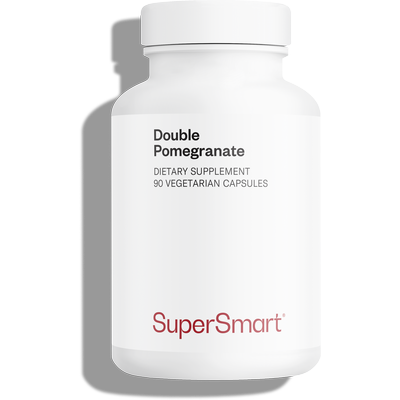
 Discover Double Pomegranate, a dietary supplement rich in polyphenolic compounds derived from pomegranates, to boost your intake of polyphenols.
Several antioxidants with recognised benefits on oxidative stress
The Mediterranean diet is not just rich in polyphenols: it also benefits from a diversity of natural antioxidants, known for their role in protecting cells against oxidative stress.
Several antioxidants, including vitamin C, vitamin E, zinc and selenium, are found in citrus fruits, peppers, nuts, vegetable oils, fish and seafood.
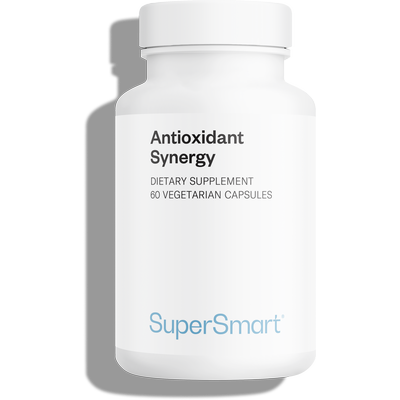
Discover Antioxidant Synergy, a single formula combining several plant extracts with antioxidant properties, including grape-seed and green tea extracts, along with glutathione.
Compounds from the olive tree: numerous effects under study
A symbol of Mediterranean culture, the olive tree doesn't only provide an oil rich in monounsaturated fatty acids.
Its leaves and fruit also contain active compounds such as oleuropein and hydroxytyrosol, two polyphenols specific to this tree.
Used in phytotherapy since ancient times, olive leaves have long been studied for their antilipidaemic, antiseptic and antiviral properties.
Modern research is highlighting many other potential effects: they could also be cardioprotective, antioxidant, hypoglycaemic, neuroprotective and anti-ageing (6-10)!
Discover Olive Leaf Extract, a natural formula produced from olive leaves and designed to control lipid levels thanks to its exceptional oleuropein content.
Omega-3 for cardiovascular and cognitive health
Omega-3s are essential fatty acids that play an important role in the Mediterranean diet.
They are found mainly in oily fish, seafood and certain nuts and seeds.
The best known, EPA and DHA, contribute to the normal functioning of the heart and the maintenance of normal blood pressure and triglyceride levels (11).
However, actual intakes in Europe and America are often 2 to 8 times lower than the minimum recommended by the World Health Organisation (12).
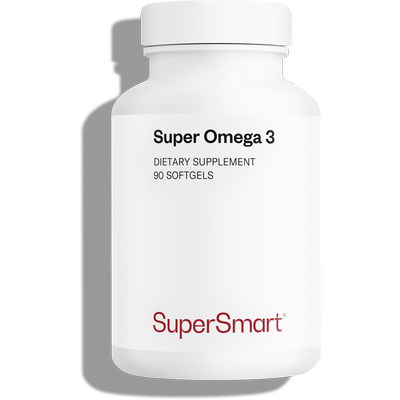
Discover Super Omega-3, a concentrated and purified formula of EPA and DHA of marine origin, designed to provide an optimal intake and support cardiovascular, cerebral and visual health.
Vitamin D
Vitamin D is one of the rare vitamins that our bodies can synthesise themselves: under the action of UVB rays, the skin produces previtamin D3, which is rapidly converted into active vitamin D3 before being stored or used by the body.
Vitamin D contributes in particular to:
- maintaining normal bone structure
- maintaining normal muscular function
- normal functioning of the immune system
- normal absorption and use of calcium and phosphorus
But the sun isn't the only way to increase your vitamin D levels!
This vitamin is found in oily fish (preferably wild) such as salmon, mackerel and sardines (13). It is also present in cod liver oil, where it is highly concentrated, and in offal and egg yolk (in smaller quantities).
Although most of our needs are met by skin synthesis under the effect of the sun and the rest by diet, deficiencies are still frequent.
Even in summer, limited sunlight, too little exposure to natural light or a diet lacking in sources of vitamin D can compromise optimal intake.
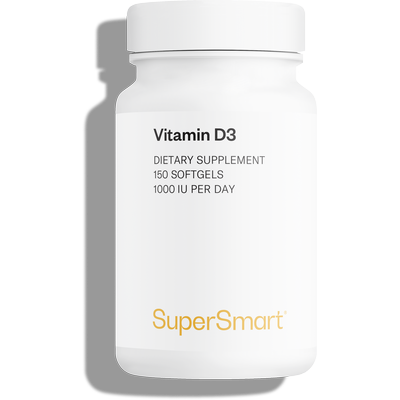
Discover Vitamin D3 1000 IU, a highly bioavailable vitamin D3 food supplement in the form most easily assimilated by the human body.
SUPERSMART ADVICE

References
- Willett WC, Sacks F, Trichopoulou A, Drescher G, Ferro-Luzzi A, Helsing E, Trichopoulos D. Mediterranean diet pyramid: a cultural model for healthy eating. Am J Clin Nutr. 1995 Jun;61(6 Suppl):1402S-1406S. doi: 10.1093/ajcn/61.6.1402S. PMID: 7754995.
- Martínez-González MA, Gea A, Ruiz-Canela M. The Mediterranean Diet and Cardiovascular Health. Circ Res. 2019 Mar;124(5):779-798. doi: 10.1161/CIRCRESAHA.118.313348. PMID: 30817261.
- What national and subnational interventions and policies based on Mediterranean and Nordic diets are recommended or implemented in the WHO European Region, and is there evidence of effectiveness in reducing noncommunicable diseases? Jessica Renzella | Nick Townsend | Jo Jewell | João Breda | Nia Roberts Mike Rayner | Kremlin Wickramasinghe, World Health Organization 2018
- Diet Quality Indices, All-Cause Mortality, Cardiovascular Disease, and Dementia—Outcomes from the Australian Longitudinal Study on Women’s Health Briar L McKenzie, Dominic Cavenagh, Clare Collins, Katie Harris, Mark Woodward, The Journal of Nutrition, Volume 155, Issue 5, May 2025, Pages 1508-1519
- Rana A, Samtiya M, Dhewa T, Mishra V, Aluko RE. Health benefits of polyphenols: A concise review. J Food Biochem. 2022 Oct ; 46 (10) : e14264. doi : 10.1111/jfbc.14264. Epub 2022 Jun 13. PMID: 35694805.
- Wu LX, Xu YY, Yang ZJ, Feng Q. Hydroxytyrosol and olive leaf extract exert cardioprotective effects by inhibiting GRP78 and CHOP expression. J Biomed Res. 2018 Sep 29 ; 32 (5) : 371-379. doi: 10.7555/JBR.32.20170111. PMID: 29760296; PMCID: PMC6163112.
- Altiok, E., Baycin, D., Bayraktar, O., Ulku, S., (2008). Isolation of polyphenols from the extracts of olive leaves (Olea europaea L.) by adsorption on silk fibroin. Sep. Purif. Technol., 62(2), 342-348.
- Takeshi, Y., Hiroshi, S., Gustavo, S., Naohide, K., Shuichi, M., (2007). Food containing olive leaf extract and -lipoic acid and prevention of diseases due to accumulation of advanced glycation end products with the food. Patent written in Japanese. JP 2006-167353 20060616. 7 pp.
- Mohagheghi, F., Bigdeli, M. R., Rasoulian, B., Hashemi, P., Rashidi, M.P., (2011). The neuroprotective effect of olive leaf extract is related to improved blood–brain barrier permeability and brain edema in rat with experimental focal cerebral ischemia Phytomedicine, 18 (2-3), 170-175.
- Julián Castillo, J., Alcaraz, M., Benavente-García, O., (2010). Antioxidant and Radioprotective Effects of Olive Leaf Extract. Olives and Olive Oil in Health and Disease Prevention, 951-958.
- L. Breslow, « n-3 Fatty acids and cardiovascular disease », Am. J. Clin. Nutr., vol. 83, p. 1477-1482, 2006
- Food and Nutrition Board (FNB), Institute of Medicine (IOM). Dietary reference intakes for Energy, Carbohydrates, Fiber, Fats, Protein and Amino Acids (Macronutrients), The National Academies Press, 2005, Executive summary, page 11.
- Nutritious Foods That Are High in Vitamin D - Medically reviewed by Katherine Marengo LDN, R.D., Nutrition — By Taylor Jones, RD — Updated on July 6, 2023





88 Days
Fast delivery
Fast delivery, no hassle
Trusted
92 Days
Great product
Great product, quick delivery
Jamal
95 Days
Very good helps me everytime
Very good helps me everytime
TAMMINEN Liis
97 Days
it helps a lot on digestion
it helps a lot on digestion
Elisa Fleury
103 Days
Super fast delivery
Super fast delivery. Trying flexismart at the moment, Maybe a bit too soon to see results bit nice tolérance so far.
Maria Angeles Verdu
103 Days
Good service
Supersmart are an efficient company - the order arrived quickly. This is usual for them, though they have occasionally been let down by delivery firms - not a surprise and not their fault.
Barry Humphries
104 Days
Excellent product
Excellent product, quick delivery
FERENCNE Soros
106 Days
High quality, reliable service!
I have been ordering their products for years! They are excellent quality. And despite the international shipping, my order allways arrived pretty fast. The loyalty program is very fair, I get great prices on the products. Imagine: my specialists are asking me what have I been taking that my counts are so good!
Petra Hruskova
107 Days
I purchased Melatonin
I purchased Melatonin, very quick delivery to the UK and product is perfect. Very Happy
Dean Harriss
109 Days
Avis général
Well boxes are white but that puts a bit of serious color for my grey matter. Supersmart is quality products and made myself a pharmacy. Honestly should be remboursed by the health institutes selling pills
LEBORDAIS Thomas
110 Days
Arrives in just five days even to Japan…
Arrives in just five days even to Japan – that’s insanely fast! Amazing lineup of innovative products.
namio
113 Days
Quality and choice of supplements.
Quality and choice of supplements.
Maja
117 Days
perfect great
perfect great
igor janic
122 Days
Good products and speedy delivery
Good products and speedy delivery
Jim
126 Days
Very good
Very good, fast delivery
Paddy
of experience
your money back
##montant## purchase