
Anti-ageing: fascinating new revelations about flavonoids
Several recent studies highlight the potential of flavonoids for healthy ageing.


Flavonoids: the polyphenols of longevity?
Flavonoids are a class of molecules in the polyphenol family (1). Ubiquitous in vascular plants, they are subdivided into 7 subclasses according to their chemical structure: flavonols, flavanols, flavanones, flavones, chalcones, isoflavones and anthocyanins.
These compounds are concentrated in fruit, vegetables, legumes and cereals, where they can colour the petals or pericarps, and they are also present in nuts. In our diet, they are found in citrus fruit, red fruit, green tea and cocoa (2).
It's no coincidence that flavonoids are attracting growing interest in anti-ageing research. It is widely accepted that they play a key role in the defensive strategy of plants, protecting them from environmental stresses such as exposure to cold or UV light, pathogenic invasion, injury or nutrient deprivation (3). As a result, flavonoids help preserve plants’ physical integrity and may increase their longevity. It remains to be seen whether this ‘shield effect’ can be transposed to the human level... and in what way.
Anti-ageing nutrition: what do the latest studies on flavonoids reveal?
A deceleration in biological ageing
An initial cross-sectional study published in 2024 supports this hypothesis (4). By compiling data from 5,391 American adults collected during the National Health and Nutrition Examination Survey (NHANES) between 2007 and 2018, the researchers found a negative association between dietary flavonoid intake and the acceleration of ageing, with certain subclasses (flavones, flavanones, flavan-3-ols and flavonols) appearing to exert a more marked action.
A second study, also based on the NHANES results, more precisely calculated the biological age of the whole body and certain organs of 3,193 participants and compared them with their chronological age (5). A negative difference between these two values suggests a slowdown in the biological ageing process. The findings show that people with the highest flavonoid intakes experience slower biological ageing than others, with effects particularly noted in the heart and liver.
Broad-spectrum protective action
A final review sheds light on the precise mechanisms of action of flavonoids, resulting in potential anti-inflammatory and antioxidant activity (6).
At the cardiovascular level, it appears that flavonoids interact with the endothelial cells of the vascular walls, which regulate vasodilatation, and the oxidation reactions of LDL cholesterol, involved in the formation of atherosclerotic plaques. A third-party publication reports a possible improvement in glucose and insulin tolerance in the liver, as well as an increase in intracellular levels of glutathione (the most powerful endogenous antioxidant) (7).
Flavonoids also have applications in neuroprotection. By opposing lipid peroxidation and reactive oxygen species, as well as stimulating the production of new neuronal cells, they are an increasingly serious way of slowing cognitive decline in the elderly.
These precious molecules are also thought to limit the proliferation and accumulation of dysfunctional cells in tissues, held responsible for many age-related metabolic and degenerative diseases. They interfere with the processes of apoptosis and autophagy, inhibit certain pro-inflammatory cytokines, and play a more general role in the innate and adaptive immune response.
On a more secondary level, flavonoids also help to preserve the skin's youthful appearance and radiance. They do this by trapping free radicals and inhibiting certain enzymes that affect the structural proteins of skin tissue (collagenase, elastase, hyaluronidase), or those involved in hyperpigmentation (tyrosinase).
How can I include more flavonoids in my diet?
It's essential to make your diet more plant-based, with an emphasis on coloured fruit and vegetables (yellow, orange, red, purple, etc.), which often contain flavonoids. It's also advisable to diversify sources (to draw on a wider range of benefits), as well as respecting the seasonal nature of produce (those grown out of season, particularly in heated glasshouses with controlled nutrient inputs, are less subject to natural stressors and therefore synthesise fewer flavonoids to defend themselves). Finally, it is also possible to use flavonoid food supplements to maximise your intake easily and effectively.
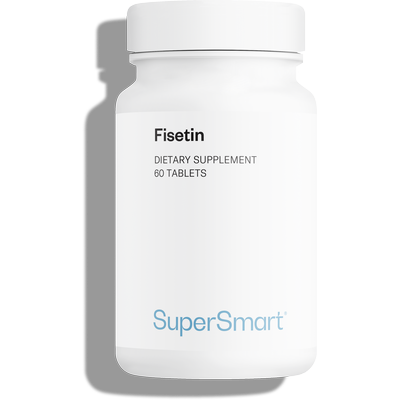
Fisetin: an assault on senescent cells
Fisetin is a flavonol found in significant quantities in strawberries, and to a lesser extent in apples, onions, cucumbers and persimmons. Scientists see it as a promising renolytic, capable of targeting 'defective' senescent cells. In particular, it is thought to block certain cell signalling pathways and several pro-inflammatory cytokines (including TNFα, IL-6 and the transcription factor NF-κB). It is also thought to interact directly with the reactive oxygen species generated during oxidative stress, acting as a reducing agent (8).
 The Fisetin supplement contains an unbeatable 500g of fisetin.
Quercetin: an asset for the heart
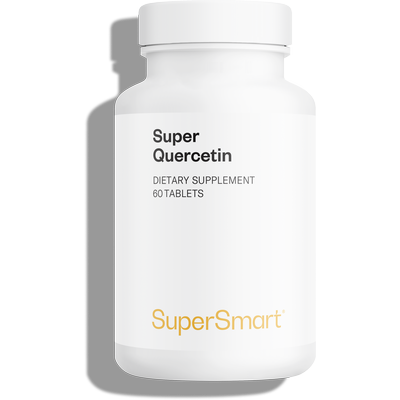
Found in abundance in onions, capers and apples, quercetin is a flavonol structurally similar to fisetin. Its extensive biological properties, ranging from modulation of the inflammatory response to regulation of oxidative stress and lipid normalisation, are paving the way for new approaches to combating age-related disorders, particularly those affecting the cardiovascular system (9).
Our patented anhydrous quercetin Super Quercetin is 170% better absorbed than conventional forms.
Luteolin: a potential brake on cerebral ageing
Found in celery, thyme and green peppers, luteolin is one of the most common flavones. A modulator of skin ageing, it is also a serious candidate for neuroprotection. One study highlighted its potential ability to attenuate cerebral senescence in ageing rats, with an improvement in mitochondrial function and regeneration of hippocampal neurons (10).
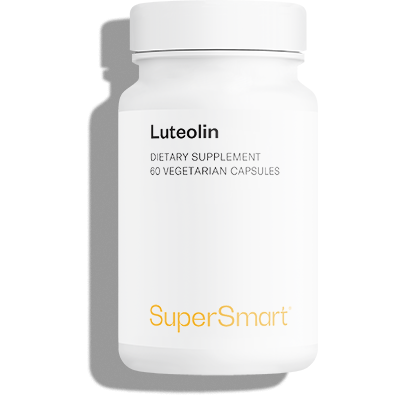
The luteolin in the Luteolin supplement is extracted naturally from peanut shells.
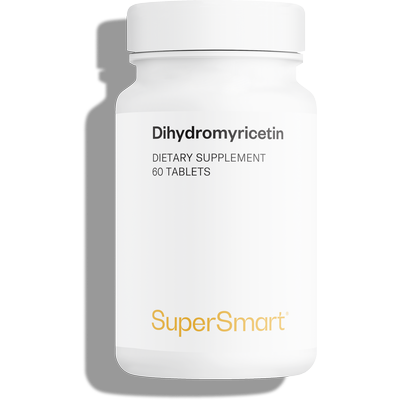
Dihydromyricetin: a promising source of rejuvenation
Extracted from Chinese grapevine or bamboo, dihydromyricetin (or DHM) is a flavanonol commonly used to support liver detoxification. Could it be about to take on a new purpose in the anti-ageing field? Perhaps. A study suggests that DHM could extend the lifespan and health of Drosophila (by inhibiting pERK and pAKT signalling), thereby delaying their muscular and intestinal senescence (11). These results are all the more edifying given that this insect shares the same genetic mechanisms for ageing as we do.
Dihydromyricetin is based on an extract of Ampelopsis grossedentata standardised to 98% dihydromyricetin.
Hesperidin: for capillary permeability
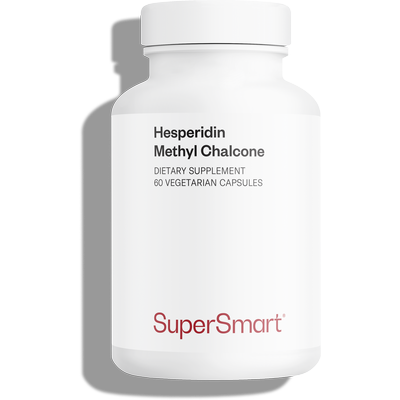
Hesperidin is a rutinoside, a flavonoid naturally found in the skin of citrus fruits such as oranges, lemons and grapefruit. It is thought to have a vitamin P action ('P' standing for blood capillary permeability), which has led to its inclusion in certain veinotonic and vasculoprotective treatments in conventional medicine. Other studies have highlighted its significant effects on microvascular reactivity, blood pressure and biomarkers of cardiovascular risk (12).
Hesperidin Methyl Chalcon is a methylated derivative of hesperidin, which is better absorbed from the intestine than the original form.
Naringin: a candidate for cardioprotection
Also hidden in citrus fruits, naringin gives grapefruit its bitter flavour. While this flavanone has a remarkably wide range of biological functions (reducing lipid peroxidation, metabolising carbohydrates and fatty acids, modulating immune and inflammatory responses, etc.), it is in cardiovascular protection that it seems to particularly stand out (13).
Using all parts of the fruit (pulp, skin and seeds), our Grapefruit Extract contains 99% naringin.
Apigenin
Found in celery, camomile, thyme and tea, apigenin is a flavone whose pharmacological properties are constantly being developed as a result of scientific discoveries. It is currently the subject of intense research into neurodegenerative disorders, as it could reactivate certain memory pathways and slow the formation of amyloid deposits in the brain.
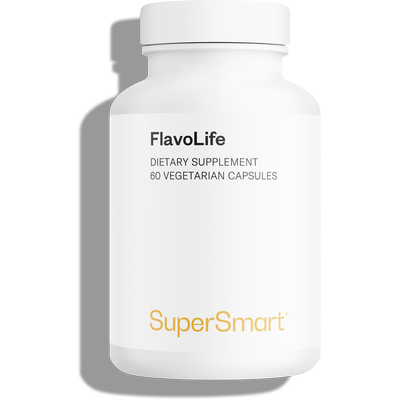
Apigenin is one of the 9 bioflavonoid compounds in the FlavoLife super-synergy, alongside quercetin, fisetin, hesperidin and luteolin.
SUPERSMART ADVICE
References
- Panche AN, Diwan AD, Chandra SR. Flavonoids: an overview. J Nutr Sci. 2016 Dec 29;5:e47. doi: 10.1017/jns.2016.41. Erratum in: J Nutr Sci. 2025 Jan 29;14:e11. doi: 10.1017/jns.2024.73. PMID: 28620474; PMCID: PMC5465813.
- Kozłowska A, Szostak-Wegierek D. Flavonoids--food sources and health benefits. Rocz Panstw Zakl Hig. 2014;65(2):79-85. PMID: 25272572.
- Safe S, Jayaraman A, Chapkin RS, Howard M, Mohankumar K, Shrestha R. Flavonoids: structure-function and mechanisms of action and opportunities for drug development. Toxicol Res. 2021 Jan 20;37(2):147-162. doi: 10.1007/s43188-020-00080-z. PMID: 33868973; PMCID: PMC8007671.
- Zhong J, Fang J, Wang Y, Lin P, Wan B, Wang M, Deng L, Tang X. Dietary flavonoid intake is negatively associated with accelerating aging: an American population-based cross-sectional study. Nutr J. 2024 Dec 20;23(1):158. doi: 10.1186/s12937-024-01052-x. PMID: 39707398; PMCID: PMC11661325.
- Xing W, Gao W, Zhao Z, Xu X, Bu H, Su H, Mao G, Chen J. Dietary flavonoids intake contributes to delay biological aging process: analysis from NHANES dataset. J Transl Med. 2023 Jul 21;21(1):492. doi: 10.1186/s12967-023-04321-1. PMID: 37480074; PMCID: PMC10362762.
- Păcularu-Burada B, Cîrîc AI, Begea M. Anti-Aging Effects of Flavonoids from Plant Extracts. 2024 Aug 2;13(15):2441. doi: 10.3390/foods13152441. PMID: 39123632; PMCID: PMC11311508.
- Liao Y, Lv F, Quan T, Wang C, Li J. Flavonoids in natural products for the therapy of liver diseases: progress and future opportunities. Front Pharmacol. 2024 Oct 24;15:1485065. doi: 10.3389/fphar.2024.1485065. PMID: 39512816; PMCID: PMC11540641.
- Yousefzadeh MJ, Zhu Y, McGowan SJ, Angelini L, Fuhrmann-Stroissnigg H, Xu M, Ling YY, Melos KI, Pirtskhalava T, Inman CL, McGuckian C, Wade EA, Kato JI, Grassi D, Wentworth M, Burd CE, Arriaga EA, Ladiges WL, Tchkonia T, Kirkland JL, Robbins PD, Niedernhofer LJ. Fisetin is a senotherapeutic that extends health and lifespan. EBioMedicine. 2018 Oct;36:18-28. doi: 10.1016/j.ebiom.2018.09.015. Epub 2018 Sep 29. PMID: 30279143; PMCID: PMC6197652.
- Aghababaei F, Hadidi M. Recent Advances in Potential Health Benefits of Quercetin. Pharmaceuticals (Basel). 2023 Jul 18;16(7):1020. doi: 10.3390/ph16071020. PMID: 37513932; PMCID: PMC10384403.
- Younis RL, El-Gohary RM, Ghalwash AA, Hegab II, Ghabrial MM, Aboshanady AM, Mostafa RA, El-Azeem AHA, Farghal EE, Belal AAE, Khattab H. Luteolin Mitigates D-Galactose-Induced Brain Ageing in Rats: SIRT1-Mediated Neuroprotection. Neurochem Res. 2024 Oct;49(10):2803-2820. doi: 10.1007/s11064-024-04203-y. Epub 2024 Jul 11. PMID: 38987448; PMCID: PMC11365848.
- Fan X, Zeng Y, Fan Z, Cui L, Song W, Wu Q, Gao Y, Yang D, Mao X, Zeng B, Zhang M, Ni Q, Li Y, Wang T, Li D, Yang M. Dihydromyricetin promotes longevity and activates the transcription factors FOXO and AOP in Drosophila. Aging (Albany NY). 2020 Dec 3;13(1):460-476. doi: 10.18632/aging.202156. Epub 2020 Dec 3. PMID: 33291074; PMCID: PMC7835053.
- Morand C, Dubray C, Milenkovic D, Lioger D, Martin JF, Scalbert A, Mazur A. Hesperidin contributes to the vascular protective effects of orange juice: a randomized crossover study in healthy volunteers. Am J Clin Nutr. 2011 Jan;93(1):73-80. doi: 10.3945/ajcn.110.004945. Epub 2010 Nov 10. PMID: 21068346.
- Salehi B, Fokou PVT, Sharifi-Rad M, Zucca P, Pezzani R, Martins N, Sharifi-Rad J. The Therapeutic Potential of Naringenin: A Review of Clinical Trials. Pharmaceuticals (Basel). 2019 Jan 10;12(1):11. doi: 10.3390/ph12010011. PMID: 30634637; PMCID: PMC6469163.
- Salehi B, Venditti A, Sharifi-Rad M, Kręgiel D, Sharifi-Rad J, Durazzo A, Lucarini M, Santini A, Souto EB, Novellino E, Antolak H, Azzini E, Setzer WN, Martins N. The Therapeutic Potential of Apigenin. Int J Mol Sci. 2019 Mar 15;20(6):1305. doi: 10.3390/ijms20061305. PMID: 30875872; PMCID: PMC6472148.
Keywords



88 Days
Fast delivery
Fast delivery, no hassle
Trusted
92 Days
Great product
Great product, quick delivery
Jamal
95 Days
Very good helps me everytime
Very good helps me everytime
TAMMINEN Liis
97 Days
it helps a lot on digestion
it helps a lot on digestion
Elisa Fleury
103 Days
Super fast delivery
Super fast delivery. Trying flexismart at the moment, Maybe a bit too soon to see results bit nice tolérance so far.
Maria Angeles Verdu
103 Days
Good service
Supersmart are an efficient company - the order arrived quickly. This is usual for them, though they have occasionally been let down by delivery firms - not a surprise and not their fault.
Barry Humphries
104 Days
Excellent product
Excellent product, quick delivery
FERENCNE Soros
106 Days
High quality, reliable service!
I have been ordering their products for years! They are excellent quality. And despite the international shipping, my order allways arrived pretty fast. The loyalty program is very fair, I get great prices on the products. Imagine: my specialists are asking me what have I been taking that my counts are so good!
Petra Hruskova
107 Days
I purchased Melatonin
I purchased Melatonin, very quick delivery to the UK and product is perfect. Very Happy
Dean Harriss
109 Days
Avis général
Well boxes are white but that puts a bit of serious color for my grey matter. Supersmart is quality products and made myself a pharmacy. Honestly should be remboursed by the health institutes selling pills
LEBORDAIS Thomas
110 Days
Arrives in just five days even to Japan…
Arrives in just five days even to Japan – that’s insanely fast! Amazing lineup of innovative products.
namio
113 Days
Quality and choice of supplements.
Quality and choice of supplements.
Maja
117 Days
perfect great
perfect great
igor janic
122 Days
Good products and speedy delivery
Good products and speedy delivery
Jim
126 Days
Very good
Very good, fast delivery
Paddy
of experience
your money back
##montant## purchase