
According to a Swiss clinical trial, omega-3 and vitamin D could slow down biological ageing
A Swiss clinical study conducted in February 2025 on 777 subjects over the age of 70, using epigenetic clocks, suggests that omega-3 and vitamin D could slow down biological ageing.


A Swiss clinical study measures the impact of omega-3 and vitamin D on biological ageing
This Swiss clinical trial, published in February 2025 in the journal Nature Aging, expands on the results of an initial study called DO-HEALTH, which involved a sample of 2157 European adults aged 70 and over, considered to be active and in good health. Here the scientists sought to assess the separate and combined effects of vitamin D supplementation (2,000 IU per day), omega-3 supplementation (1 g per day) and a simple home exercise programme (3 x 30 min per week) on biological ageing. For this second analysis, a sub-group of 777 participants was selected (1).
Subjects were randomly assigned to 8 treatment groups. Blood samples were taken at the start of the experiment, and again at 1, 2 and 3 years' follow-up, to collect DNA fractions and subject them to 4 next-generation epigenetic clocks (PhenoAge, GrimAge, GrimAge2 and DunedinPACE). In simple terms, these sophisticated algorithms predict the biological age of an individual by detecting certain specific modifications to the genome (methylations).
This initiative is therefore unique in that it measures the impact of nutritional strategies at the cellular level, and not just on overall health.
A reduction in biological age of 3 to 4 months with omega-3s
The initial study (which included 2,157 participants) had already reported that omega-3s alone reduced the rate of infections by 13% and the rate of falls by 10%. Combined with vitamin D and physical exercise, they also showed a reduction in pre-frailty (-39%) and invasive cancers (-61%) over 3 years.
This second trial confirms these preliminary results on the scale of cellular ageing. It was observed that omega-3 alone slowed down 3 of the 4 clocks tested (PhenoAge, GrimAge2 and DunedinPACE). More concretely, this translates to a reduction in biological age of between 2.9 and 3.8 months over 3 years.
It should be noted that the 3 combined treatments (omega-3 + vitamin D + physical exercise) led to even greater benefits on the PhenoAge clock. These benefits were all the more apparent in women, as well as in subjects with lower initial blood levels of omega-3 EPA and DHA.
How can the effects of omega-3 and vitamin D on longevity be explained?
Omega-3 EPA and DHA are involved in the normal functioning of the heart, as well as maintaining normal blood pressure and triglyceride levels (2-3). These fatty acids therefore play a vital role in safeguarding cardiovascular health, particularly by maintaining the elasticity of blood vessels and the fluidity of blood. Research also suggests that they could modulate the inflammatory response, which is present in the background of most metabolic pathologies (4). Consequently, the potential capacity of omega-3s to halt the course of biological ageing seems quite logical.
As for vitamin D, it has other strong arguments. First and foremost, it contributes to the proper functioning of the innate and adaptive immune system, playing a role in the differentiation of plasma cells and the activation of lymphocytes (5). This means that a deficiency increases the risk of infection and reduces the efficiency with which senescent or defective cells are eliminated (6). It also plays a part in the normal absorption of calcium, and therefore in the maintenance of normal bones, helping to reduce bone demineralisation in post-menopausal women, which is associated with the occurrence of osteoporotic fractures (7). By maintaining normal muscle function, it also reduces the risk of falls linked to postural instability and/or muscle weakness (8). By strengthening defence mechanisms and preventing loss of autonomy in the elderly, it seems reasonable to think that vitamin D may have a more or less direct effect on cell longevity.
Are supplements useful for delaying cell ageing?
In the light of this study, prolonged supplementation with omega-3 and vitamin D (in conjunction with regular physical activity) appears to be a promising strategy for slowing down biological ageing.
It is essential to point out that in this trial, the participants received EPA and DHA omega-3 fatty acids of marine origin. If you want similar benefits, you need to choose an omega-3 supplement that combines precisely these two forms.
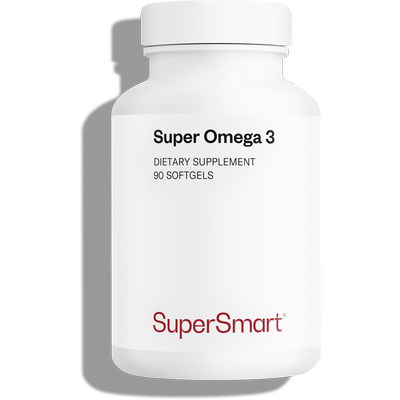
- This is the case with Super Omega 3, which comes from sustainable fishing, and whose patented purification process excludes all traces of pollutants. As for vitamin D, the dosage applied in the study was 2,000 IU per day.
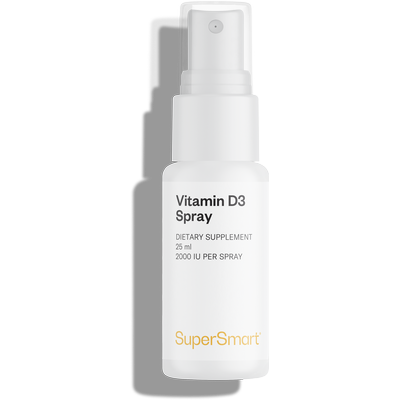
- Our handy Vitamin D3 2000 IU spray is based on exactly the same dosage. But for people who are already deficient, higher-dose formulations will restore adequate status more quickly.
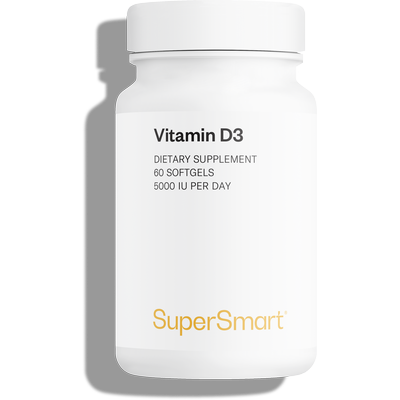
- Discover Vitamin D3 5000 IU, packaged in an oily capsule for maximum absorption.
SUPERSMART ADVICE
References
- Bischoff-Ferrari HA, Gängler S, Wieczorek M, Belsky DW, Ryan J, Kressig RW, Stähelin HB, Theiler R, Dawson-Hughes B, Rizzoli R, Vellas B, Rouch L, Guyonnet S, Egli A, Orav EJ, Willett W, Horvath S. Individual and additive effects of vitamin D, omega-3 and exercise on DNA methylation clocks of biological aging in older adults from the DO-HEALTH trial. Nat Aging. 2025 Mar;5(3):376-385. doi: 10.1038/s43587-024-00793-y. Epub 2025 Feb 3. PMID: 39900648; PMCID: PMC11922767.
- Khan SU, Lone AN, Khan MS, Virani SS, Blumenthal RS, Nasir K, Miller M, Michos ED, Ballantyne CM, Boden WE, Bhatt DL. Effect of omega-3 fatty acids on cardiovascular outcomes: A systematic review and meta-analysis. 2021 Jul 8;38:100997. doi: 10.1016/j.eclinm.2021.100997. PMID: 34505026; PMCID: PMC8413259.
- Jayasooriya AP, Begg DP, Chen N, Mathai ML, Sinclair AJ, Wilkinson-Berka J, Wark JD, Weisinger HS, Weisinger RS. Omega-3 polyunsaturated fatty acid supplementation reduces hypertension in TGR(mRen-2)27 rats. Prostaglandins Leukot Essent Fatty Acids. 2008 Jan;78(1):67-72. doi: 10.1016/j.plefa.2007.11.001. PMID: 18083506.
- Simopoulos AP. Omega-3 fatty acids in inflammation and autoimmune diseases. J Am Coll Nutr. 2002 Dec;21(6):495-505. doi: 10.1080/07315724.2002.10719248. PMID: 12480795.
- Aranow C. Vitamin D and the immune system. J Investig Med. 2011 Aug;59(6):881-6. doi: 10.2310/JIM.0b013e31821b8755. PMID: 21527855; PMCID: PMC3166406.
- Fleet JC, DeSmet M, Johnson R, Li Y. Vitamin D and cancer: a review of molecular mechanisms. Biochem J. 2012 Jan 1;441(1):61-76. doi: 10.1042/BJ20110744. PMID: 22168439; PMCID: PMC4572477.
- Voulgaridou G, Papadopoulou SK, Detopoulou P, Tsoumana D, Giaginis C, Kondyli FS, Lymperaki E, Pritsa A. Vitamin D and Calcium in Osteoporosis, and the Role of Bone Turnover Markers: A Narrative Review of Recent Data from RCTs. Diseases. 2023 Feb 8;11(1):29. doi: 10.3390/diseases11010029. PMID: 36810543; PMCID: PMC9944083.
- Agoncillo M, Yu J, Gunton JE. The Role of Vitamin D in Skeletal Muscle Repair and Regeneration in Animal Models and Humans: A Systematic Review. Nutrients. 2023 Oct 16;15(20):4377. doi: 10.3390/nu15204377. PMID: 37892452; PMCID: PMC10609905.
Keywords





48 Days
Good products
Good products
Emmanuel
51 Days
Always great service coupled with the…
Always great service coupled with the best of products Olive and David
David Walsh
53 Days
Products with quality
Products truly help.
Sari
55 Days
Your delivery service in DK is not…
Your delivery service in DK is not giving option of pick up in package shop of my choice!
SZCZEPANSKI Christopher
56 Days
Always good products
Always good products. Thank you
Silke Wieczorek
57 Days
Swift delivery
Swift delivery - quality products
Trusted
58 Days
Incredible and quick service and…
Incredible and quick service and delivery. Thank you again for your assistance. Your products are really helpful!
Kazanti Kleopatra
59 Days
this is probably not the last time i'll…
this is probably not the last time i'll buy noopept, however i'm really thankful to y'all, omberacetam helped me a lot getting out of the drug spiral, now i can finally enjoy again the scent of a flower with actual pleasure
DE ROSA Luca
61 Days
top in europe
top in europe
GIGLIO LUCA
62 Days
Thank you for producing such important…
Thank you for producing such important and rare supplements!!! You're the only ones who can provide a solution when it's impossible to find elsewhere!!! Thank you for the quality of your products and your genuine interest in anti-aging, making them accessible to those interested in this field and wanting to help themselves!!!❤
Katerina Iyulskaya
64 Days
Great!
Great product,the delivery and also good quality products
KASINGA Rebecca
66 Days
It has good products
It has good products and delivery is prompt.
Roger De Backer
69 Days
Good seller..good products and good…
Good seller..good products and good delivery service.
Sam
71 Days
A wide selection and high-quality products
I order regularly and am always happy with the service
Maria Teresa Jannone
73 Days
Prompt delivery
Prompt delivery
Alan
of experience
your money back
##montant## purchase