
Hay fever and vitamin D: lessons from a recent
Common in certain seasons, hay fever is a source of daily discomfort. As research explores the link between vitamin D status and immune response, a meta-analysis provides promising new evidence.


What is hay fever?
Hay fever, or allergic rhinitis, is an inappropriate and excessive reaction by the immune system to environmental allergens such as pollen, dust mites or certain animal hairs (1). On contact with these normally harmless substances, the body triggers an inflammatory response in the nasal mucosa, typically resulting in:
- a runny nose
- repeated sneezing
- nasal discomfort or obstruction
- fatigue and/or sleep disturbance
Although hay fever is essentially a benign condition, medical advice is still recommended in the event of severe or persistent symptoms.
Vitamin D and allergic rhinitis: the results of a recent meta-analysis
Study overview
Researchers recently published a systematic review and meta-analysis of randomised clinical trials of vitamin D supplementation in people with allergic rhinitis (2). In particular, they monitored changes in allergic symptom scores compared to a placebo and examined specific subgroups according to average age, proportion of women, associated background treatments, duration of supplementation and initial vitamin D status.
Observed but variable benefits
Their observations suggest a possible improvement in hay fever symptoms in subjects supplemented with vitamin D, but point to a high degree of variability in the results depending on the context. In particular, the effects seem to vary according to sex and the concomitant use of corticosteroids (which may lead to reduced effectiveness). It should be noted, however, that the scope of the conclusions is limited by the great heterogeneity of the protocols.
This publication therefore does not establish a universal benefit of vitamin D in hay fever. It does, however, sketch out some interesting avenues of research that should be supported by other, more homogeneous and better stratified clinical trials.
Does vitamin D mediate the allergic response?
What about the physiological mechanisms at work? It has been established that vitamin D plays a part in the proper functioning of the immune system, particularly the adaptive system, which we acquire and develop throughout our lives through contact with the pathogens or antigens we encounter (3).
In particular, it is thought to help maintain a balanced inflammatory response, by supporting the differentiation of regulatory T lymphocytes (Treg), inhibiting the production of pro-inflammatory cytokines (IL-6, IL-7, TNF-α, etc.) and stimulating the secretion of anti-inflammatory cytokines (IL-10) (4-5). It may therefore have some relevance to allergic reactions, which are underpinned by inappropriate immune activation.
Where to find vitamin D, and how to incorporate it into your diet in the event of hay fever
Vitamin D is mainly synthesised by the skin through exposure to the sun, which is why it is known as the 'sunshine vitamin' (6). It is also provided, in more modest quantities, by oily fish, egg yolks, offal such as liver, or certain fortified foods (milk, cottage cheese, etc.) (7).
In the event of suspected or proven deficiency, vitamin D supplementation can be discussed with a health professional. This should, of course, remain under supervision, especially in the case of known pathologies. It should also be remembered that food supplements are never a substitute for medical treatment for allergic rhinitis. They are part of an overall support approach that includes reducing exposure to allergens, good nasal hygiene, quality sleep and, of course, applying all the measures prescribed by the doctor or allergist.
Thinking of taking a supplement? Vitamin D supplements come in different forms and dosages.
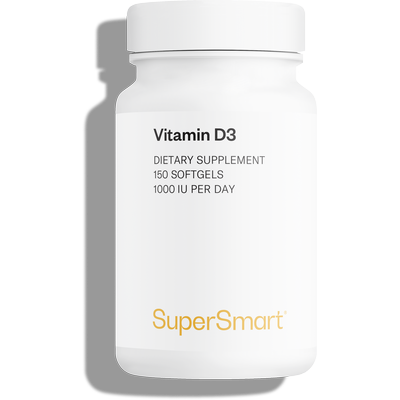
 Vitamin D3 1000 IU, packaged in oily capsules, is suitable for everyone.
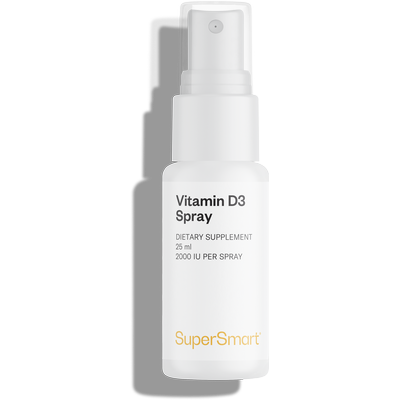
With its practical spray format, Vitamin D3 Spray 2,000 IU is particularly well tolerated by the stomach.
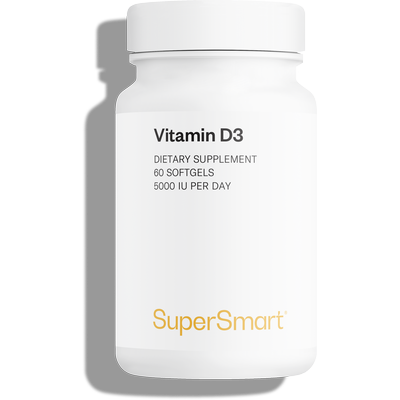
Vitamin D3 5000 IU uses a powerful dosage to quickly restore adequate levels.
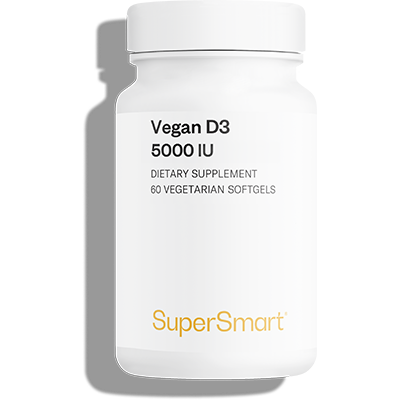
Its 100% plant-based version, Vegan D3 5000 IU, is derived from non-GMO, pesticide-free algae.
For broader support, you can also rely on certain plants or substances studied for their potential antihistaminic and/or immunomodulating properties to help you feel more comfortable during allergy season. Like astragalus, which contributes to general well-being and regulates the immune system, or maritime pine, which promotes good respiratory health (8-9).
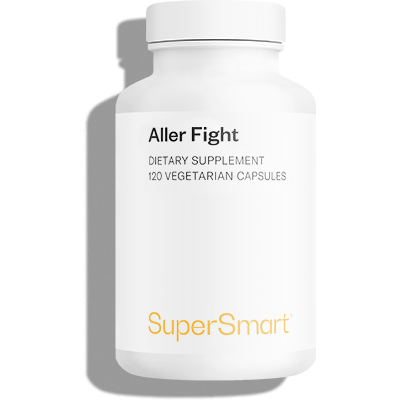
Aller Fight synergy combines the best allergy-tested ingredients in a single formula: astragalus, maritime pine, spirulina, bromelain, etc.
Finally, it's a good idea to supplement the action of vitamin D with other vitamins and minerals that help maintain normal immune function, such as vitamins A, B6, B12 and C, and zinc (10-12).
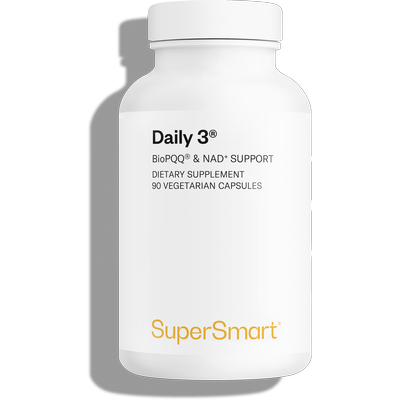
You'll find it in Daily 3®, the most complete multivitamin supplement on the market.
SUPERSMART ADVICE
References
- Akhouri S, House SA. Allergic Rhinitis. [Updated 2023 Jul 16]. In: StatPearls [Internet]. Treasure Island (FL): StatPearls Publishing; 2025 Jan-. Available from: https://www.ncbi.nlm.nih.gov/books/NBK538186/
- Kawada K, Sato C, Ishida T, Nagao Y, Yamamoto T, Jobu K, Hamada Y, Izawa Ishizawa Y, Ishizawa K, Abe S. Vitamin D Supplementation and Allergic Rhinitis: A Systematic Review and Meta-Analysis. Medicina (Kaunas). 2025 Feb 18;61(2):355. doi: 10.3390/medicina61020355. PMID: 40005471; PMCID: PMC11857834.
- Aranow C. Vitamin D and the immune system. J Investig Med. 2011 Aug;59(6):881-6. doi: 10.2310/JIM.0b013e31821b8755. PMID: 21527855; PMCID: PMC3166406.
- Cantorna MT, Mahon BD. Mounting evidence for vitamin D as an environmental factor affecting autoimmune disease prevalence. Exp Biol Med (Maywood). 2004 Dec;229(11):1136-42. doi: 10.1177/153537020422901108. PMID: 15564440.
- Jerzyńska J, Stelmach W, Rychlik B, Majak P, Podlecka D, Woicka-Kolejwa K, Stelmach I. Clinical and immunological effects of vitamin D supplementation during the pollen season in children with allergic rhinitis. Arch Med Sci. 2018 Jan;14(1):122-131. doi: 10.5114/aoms.2016.61978. Epub 2016 Aug 29. PMID: 29379542; PMCID: PMC5778420.
- Chauhan K, Shahrokhi M, Huecker MR. Vitamin D. [Updated 2023 Apr 9]. In: StatPearls [Internet]. Treasure Island (FL): StatPearls Publishing; 2025 Jan-. Available from: https://www.ncbi.nlm.nih.gov/books/NBK441912/
- Lamberg-Allardt C. Vitamin D in foods and as supplements. Prog Biophys Mol Biol. 2006 Sep;92(1):33-8. doi: 10.1016/j.pbiomolbio.2006.02.017. Epub 2006 Feb 28. PMID: 16618499.
- Matkovic Z, Zivkovic V, Korica M, Plavec D, Pecanic S, Tudoric N. Efficacy and safety of Astragalus membranaceus in the treatment of patients with seasonal allergic rhinitis. Phytother Res. 2010 Feb;24(2):175-81. doi: 10.1002/ptr.2877. PMID: 19504468.
- Weichmann F, Rohdewald P. Pycnogenol® French maritime pine bark extract in randomized, double-blind, placebo-controlled human clinical studies. Front Nutr. 2024 May 2;11:1389374. doi: 10.3389/fnut.2024.1389374. PMID: 38757130; PMCID: PMC11096518.
- Carr AC, Maggini S. Vitamin C and Immune Function. Nutrients. 2017 Nov 3;9(11):1211. doi: 10.3390/nu9111211. PMID: 29099763; PMCID: PMC5707683.
- Wessels I, Maywald M, Rink L. Zinc as a Gatekeeper of Immune Function. Nutrients. 2017 Nov 25;9(12):1286. doi: 10.3390/nu9121286. PMID: 29186856; PMCID: PMC5748737.





88 Days
Fast delivery
Fast delivery, no hassle
Trusted
92 Days
Great product
Great product, quick delivery
Jamal
95 Days
Very good helps me everytime
Very good helps me everytime
TAMMINEN Liis
97 Days
it helps a lot on digestion
it helps a lot on digestion
Elisa Fleury
103 Days
Super fast delivery
Super fast delivery. Trying flexismart at the moment, Maybe a bit too soon to see results bit nice tolérance so far.
Maria Angeles Verdu
103 Days
Good service
Supersmart are an efficient company - the order arrived quickly. This is usual for them, though they have occasionally been let down by delivery firms - not a surprise and not their fault.
Barry Humphries
104 Days
Excellent product
Excellent product, quick delivery
FERENCNE Soros
106 Days
High quality, reliable service!
I have been ordering their products for years! They are excellent quality. And despite the international shipping, my order allways arrived pretty fast. The loyalty program is very fair, I get great prices on the products. Imagine: my specialists are asking me what have I been taking that my counts are so good!
Petra Hruskova
107 Days
I purchased Melatonin
I purchased Melatonin, very quick delivery to the UK and product is perfect. Very Happy
Dean Harriss
109 Days
Avis général
Well boxes are white but that puts a bit of serious color for my grey matter. Supersmart is quality products and made myself a pharmacy. Honestly should be remboursed by the health institutes selling pills
LEBORDAIS Thomas
110 Days
Arrives in just five days even to Japan…
Arrives in just five days even to Japan – that’s insanely fast! Amazing lineup of innovative products.
namio
113 Days
Quality and choice of supplements.
Quality and choice of supplements.
Maja
117 Days
perfect great
perfect great
igor janic
122 Days
Good products and speedy delivery
Good products and speedy delivery
Jim
126 Days
Very good
Very good, fast delivery
Paddy
of experience
your money back
##montant## purchase