
What is the best natural antihistamine?
Allergies are on the increase worldwide. To alleviate their troublesome symptoms, sufferers are increasingly turning to natural antihistamines.


Why use antihistamines for allergies?
What role does histamine play in an allergy?
Allergy, which has become a real public health problem, is an inappropriate and excessive reaction by the immune system.
When it comes into contact with a foreign substance (the allergen, such as pollen or certain foods), the body goes into overdrive, believing it is recognising a harmful intruder, even though the substance is harmless.
The B lymphocytes then produce specific antibodies called IgE, which are responsible for recognising future intruders of the same type and neutralising them.
IgE antibodies are linked to large reserve cells called mast cells, which are particularly rich in histamine, a protective molecule usually used by the body in response to infection or injury.
With each new encounter with the allergen (even if the allergen is harmless), the IgE antibodies sound the alarm and the associated mast cells release their massive reserve of histamine, causing the unpleasant symptoms of allergy.
How can histamine be neutralised to avoid or limit allergic symptoms?
Once released, histamine molecules bind to 4 different receptors (H1, H2, H3 and H4) located on cells in the blood vessels, stomach, brain and immune cells.
This triggers various symptoms, such as vasodilation of the vessels (redness and swelling), contraction of the bronchi (coughing, breathing problems), itching, etc.
One of the best ways of interrupting this reaction, and limiting its consequences, is to prevent histamines from binding to their receptors in one way or another.
Medicated antihistamines
Medicated antihistamines are used for this purpose:
- first-generation anti-H1 drugs, known as anticholinergics: they have the disadvantage of causing drowsiness because, by blocking histamine receptors in the brain, they disrupt the mechanisms of alertness and wakefulness;
- second-generation anti-H1 drugs, which are non-anticholinergic (and therefore have less effect on the central nervous system) but are sometimes less effective.
Natural antihistamines can also be used, although they are not a complete substitute for synthetic antihistamines, particularly in the case of severe symptoms. Instead, they are used for mild allergies such as allergic rhinitis (hay fever).
Quercetin: the number 1 natural antihistamine
Definition of quercetin, a potential antihistamine pigment
Quercetin is undoubtedly the most powerful potential natural antihistamine known to date.
Quercetin is a flavonoid polyphenol found fairly easily in fruit and vegetables, and is unintentionally consumed in quantities of between 5 and 40 mg a day.
Its efficacy has been compared in several studies to certain antihistamine drugs (1).
Unlike the latter, quercetin does not directly prevent histamines from binding to their various receptors, but it does disrupt their release by mast cells.
Other mechanisms of action have been suggested, such as reducing the messengers that encourage the inflammatory response, including interleukin 4.
Its potential ability to relieve both the symptoms of allergic rhinitis (2-3) (sneezing attacks, itching, itchy eyes, etc.) and those of atopic dermatitis (4-5) is regularly tested in the laboratory.
Two studies (6-7) conducted under natural conditions (in vivo) and focusing on both the early phase (immediate hypersensitivity) and the late phase (inflammatory reaction), suggest that it is useful for attenuating allergic reactions.
Which foods contain quercetin?
Natural sources of quercetin include, in descending order:
- capers (234 mg per 100 g);
- lovage (180 mg per 100 g);
- red onion (120 mg per 100 g);
- fresh dill (55 mg per 100 g);
- yellow onion (50 mg per 100 g);
- asparagus (37 mg per 100 g);
- dark chocolate (25 mg per 100 g);
- kale (23 mg per 100 g);
- broccoli (12 mg per 100 g);
- unpeeled apples (4 mg per 100 g); and
- red fruit in general (grapes, berries, cherries, etc.).
As you can see, it's difficult to consume large quantities of quercetin through the diet, but several clinical and epidemiological studies have nonetheless established a link between high and regular consumption of quercetin-rich foods and the alleviation of troublesome allergic symptoms.
Note that heat does not alter quercetin, but cooking kale in water causes losses of up to 30%.
How should I choose my quercetin supplement?
In the event of a sudden allergic reaction, quercetin food supplements are obviously more reliable, as it's not always easy to eat capers or onions at the recommended quercetin intake level: 200 to 1,000 mg per day.
Quercetin supplements are available without a prescription.
Ideally, choose an anhydrous quercetin supplement, which has the advantage of containing virtually no water, meaning you pay only for the active form of the compound.
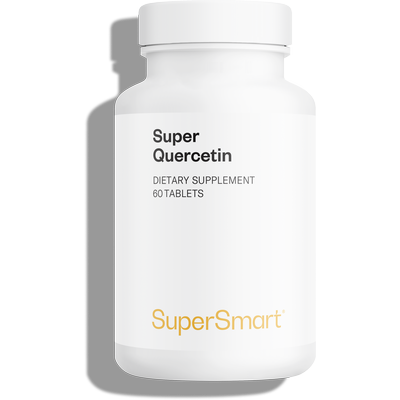
Anhydrous quercetin is also reputed to be more stable and more bioavailable (this is the case with Super Quercetin, which contains a patented form of quercetin, named QU995™, derived from exclusive extraction and purification processes, guaranteed to be free of heavy metals and with a 170% improvement in bioavailability compared to the quercetin usually on the market) (8).
The other contenders: natural antihistamines that can also make a difference
Quercetin is undoubtedly the leading antihistamine, but other natural compounds are close behind.
- Vitamin C. This vitamin is thought to promote both the breakdown and elimination of histamine, while limiting its overproduction by mast cells.
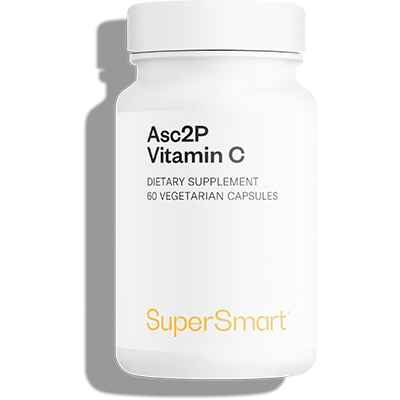
How can you make the most of it? By opting for vitamin C supplements (such as Asc2P Vitamin C). An added bonus is that it reinforces the action of quercetin. - Rutin. This powerful flavonoid, structurally very similar to quercetin, is thought to help slow down the release of histamine.
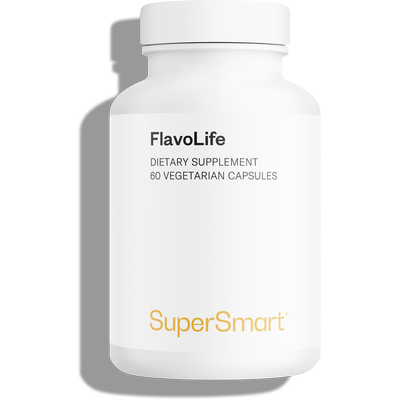
How can you benefit from it? By eating buckwheat and citrus fruit, or by choosing supplements containing it (such as FlavoLife). - Butterbur. Extracted from the butterbur plant (whose large leaves form hearts), it is thought to help scramble pro-inflammatory messengers and may also slow the release of histamine.
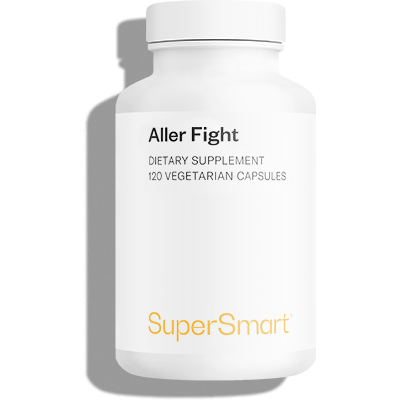
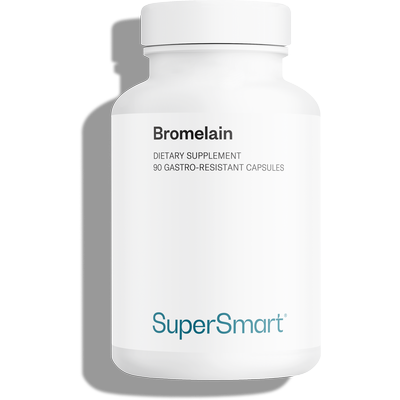
How can it be used? The plant should not be eaten raw, as it contains pyrrolizidine alkaloids, which are carcinogenic and toxic to the liver and lungs. That leaves food supplements that use an adapted form (such as Aller Fight). - Bromelain. This enzyme is thought to have 3 synergistic effects: it slows the release of histamine, influences pro-inflammatory messengers and improves the absorption of other natural antihistamines.
How can you benefit? By eating pineapple (the core contains more bromelain, although it's tough and not usually eaten) or dedicated supplements (such as Bromelain). - Luteolin. Again, a flavonoid that is thought to help stabilise mast cells and interfere with the release of histamine, while also influencing inflammation.
How can you benefit from it? By eating celery (10 to 30 mg per 100 g), fresh herbs such as thyme and parsley, green peppers and carrots.
Synergistic food supplements for allergy sufferers
Finally, you should be aware that several formulas dedicated to allergic phenomena bring together powerful, potential natural antihistamines, or at least those that act together synergistically and are the safest.
This is particularly true of Aller Fight, a very popular blend containing bromelain, spirulina, astragalus root extract, petasin and maritime pine proanthocyanidins. This formula is specially designed to help regulate the immune defence system against allergens, as well as supporting general well-being and cardiovascular and respiratory health.
SUPERSMART ADVICE
References
- Jafarinia M, Sadat Hosseini M, Kasiri N, Fazel N, Fathi F, Ganjalikhani Hakemi M, Eskandari N. Quercetin with the potential effect on allergic diseases. Allergy Asthma Clin Immunol. 2020 May 14;16:36. doi: 10.1186/s13223-020-00434-0. PMID: 32467711; PMCID: PMC7227109.
- Irie S, et al. Suppressive activity of quercetin on periostin functions in vitro. In Vivo. 2016;30(1):17–25.
- Ebihara N, et al. Suppressive effect of quercetin on nitric oxide production from nasal epithelial cells in vitro. Evid Based Complement Alternat Med. 2018;2018:6097625.
- Matsushima M, et al. Heme oxygenase-1 mediates the anti-allergic actions of quercetin in rodent mast cells. Inflamm Res. 2009;58(10):705–715.
- Manca ML, et al. Improvement of quercetin protective effect against oxidative stress skin damages by incorporation in nanovesicles. Colloids Surf B. 2014;123:566–574.
- Jung CH, et al. Anti-asthmatic action of quercetin and rutin in conscious guinea-pigs challenged with aerosolized ovalbumin. Arch Pharmacal Res. 2007;30(12):1599.
- Moon H, et al. Quercetin inhalation inhibits the asthmatic responses by exposure to aerosolized-ovalbumin in conscious guinea-pigs. Arch Pharmacal Res. 2008;31(6):771.
Keywords



88 Days
Fast delivery
Fast delivery, no hassle
Trusted
92 Days
Great product
Great product, quick delivery
Jamal
95 Days
Very good helps me everytime
Very good helps me everytime
TAMMINEN Liis
97 Days
it helps a lot on digestion
it helps a lot on digestion
Elisa Fleury
103 Days
Super fast delivery
Super fast delivery. Trying flexismart at the moment, Maybe a bit too soon to see results bit nice tolérance so far.
Maria Angeles Verdu
103 Days
Good service
Supersmart are an efficient company - the order arrived quickly. This is usual for them, though they have occasionally been let down by delivery firms - not a surprise and not their fault.
Barry Humphries
104 Days
Excellent product
Excellent product, quick delivery
FERENCNE Soros
106 Days
High quality, reliable service!
I have been ordering their products for years! They are excellent quality. And despite the international shipping, my order allways arrived pretty fast. The loyalty program is very fair, I get great prices on the products. Imagine: my specialists are asking me what have I been taking that my counts are so good!
Petra Hruskova
107 Days
I purchased Melatonin
I purchased Melatonin, very quick delivery to the UK and product is perfect. Very Happy
Dean Harriss
109 Days
Avis général
Well boxes are white but that puts a bit of serious color for my grey matter. Supersmart is quality products and made myself a pharmacy. Honestly should be remboursed by the health institutes selling pills
LEBORDAIS Thomas
110 Days
Arrives in just five days even to Japan…
Arrives in just five days even to Japan – that’s insanely fast! Amazing lineup of innovative products.
namio
113 Days
Quality and choice of supplements.
Quality and choice of supplements.
Maja
117 Days
perfect great
perfect great
igor janic
122 Days
Good products and speedy delivery
Good products and speedy delivery
Jim
126 Days
Very good
Very good, fast delivery
Paddy
of experience
your money back
##montant## purchase