
St. John’s Wort: how this plant could promote mental well-being
Used for millennia, St. John’s Wort has enjoyed renewed popularity in recent years, primarily for its potential effects on emotional balance and mood. Discover everything you’ve ever wanted to know about St. John’s Wort.


The potential benefits of St. John’s Wort for mental health
St. John’s Wort (Hypericum Perforatum) is a herbaceous perennial, from the Clusiaceae family. It was used in traditional pharmacopoeia to treat insomnia and reduce anxiety. It is considered by some to be the ‘best natural anti-depressant‘ there is.
St. John’s Wort is said to support:
- good emotional balance
- mental and physical well-being ;
- positive mood
- good balance of the nervous system during the menstrual cycle;
- optimal relaxation;
- good quality sleep;
- stimulation of mental capacities;
- strengthening of the body’s defences...
These health claims, allowed by the EFSA (European Food Safety Authority), are currently being examined by this same organisation.
How St. John’s Wort is thought to act on the ‘happy hormones’
St. John’s Wort is known to contain high levels of hypericin, a natural pigment from the naphtodianthrone family.
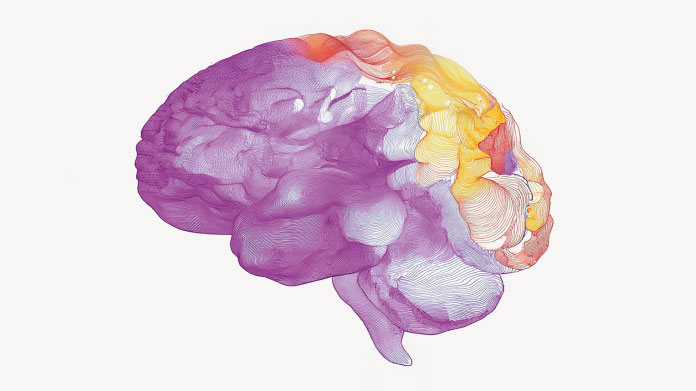
For a better understanding of how the plant works, we need to focus on our synapses. A synapsis forms a sort of information channel between two neurons in the brain: one which sends the message and the other which receives it.
The neurotransmitters responsible for transferring this information via synapses include serotonin, dopamine and noradrenalin (the famous ‘happy hormones’ associated with feelings of pleasure, well-being and other positive emotions).
The problem is that a significant proportion of these neurotransmitters can be instantly recaptured by the ‘sender’ neurons. The more this happens, the less the brain receives the happiness and pleasure information … and the greater the effect on the individual’s mood.
A number of in vivo tests have shown that the hypericin in St. John’s Wort appears to inhibit the recapture of serotonin, dopamine and noradrenalin (1). The synthetic compounds used in treatments for depression exploit precisely this kind of mechanism.
Choose a St. John’s Wort extract with the right dose of hypericin
According to researchers at the CNRS (Centre National de la Recherche Scientifique) and University Hospital of Montpellier, “only a St. John’s Wort extract with a guaranteed content of active principles has demonstrated therapeutic efficacy”(2).
Indeed the concentration of active ingredients in individual plants can vary considerably depending on the soil, growing conditions, etc. It’s therefore important to check the hypericin content of your supplement, which should ideally be in the region of 0.3% (try, for example, the excellent product St John's Wort Extract). (4)
St. John’s Wort: a few contraindications
As with many plants used in phytotherapy, St. John’s Wort can sometimes interact with other medications and is thus contraindicated in certain cases. Always check with your doctor before taking St. John’s Wort.
St. John’s Wort may affect the efficacy of drug treatments in the following cases:
- transplant patients;
- oral contraception;
- anticoagulant treatment;
- AIDs patients;
- Hepatitis C patients on peginterferon;
- epilepsy;
- hypertension;
- heart failure;
- and asthma (5).
References
- Müldner H, Zöller M. [Antidepressive effect of a Hypericum extract standardized to an active hypericine complex. Biochemical and clinical studies] Arzneimittel-forschung. 1984 ;34(8):918-920.
- https://www.researchgate.net/profile/Sylvie_Rapior/publication/259474999_Le_Millepertuis_ou_St_John's_Wort_Une_indication_therapeutique_en_France_-_De_nombreux_risques_d'interactions_avec_les_medicaments/links/00b7d52c0593c9f0e6000000/Le-Millepertuis-ou-St-Johns-Wort-Une-indication-therapeutique-en-France-De-nombreux-risques-dinteractions-avec-les-medicaments.pdf
- Linde K, Berner MM, Kriston L. St John’s wort for major depression. Cochrane Database of Systematic Reviews 2008, Issue 4. Art. No., https://serval.unil.ch/resource/serval:BIB_97D9CEAA4408.P001/REF.pdf
- KECK, Martin E, et al. Le traitement des troubles anxieux : 1ère partie : Trouble panique, agoraphobie, anxiété généralisée, phobie sociale, phobies spécifiques. Swiss Medical Forum, 2011, vol. 11, no. 34, p. 558-566, http://archive-ouverte.unige.ch/unige:32699
- Revue Prescrire, 2004, 24 (250) : 362-369.
Keywords




48 Days
Good products
Good products
Emmanuel
52 Days
Always great service coupled with the…
Always great service coupled with the best of products Olive and David
David Walsh
54 Days
Products with quality
Products truly help.
Sari
55 Days
Your delivery service in DK is not…
Your delivery service in DK is not giving option of pick up in package shop of my choice!
SZCZEPANSKI Christopher
56 Days
Always good products
Always good products. Thank you
Silke Wieczorek
58 Days
Swift delivery
Swift delivery - quality products
Trusted
58 Days
Incredible and quick service and…
Incredible and quick service and delivery. Thank you again for your assistance. Your products are really helpful!
Kazanti Kleopatra
59 Days
this is probably not the last time i'll…
this is probably not the last time i'll buy noopept, however i'm really thankful to y'all, omberacetam helped me a lot getting out of the drug spiral, now i can finally enjoy again the scent of a flower with actual pleasure
DE ROSA Luca
61 Days
top in europe
top in europe
GIGLIO LUCA
62 Days
Thank you for producing such important…
Thank you for producing such important and rare supplements!!! You're the only ones who can provide a solution when it's impossible to find elsewhere!!! Thank you for the quality of your products and your genuine interest in anti-aging, making them accessible to those interested in this field and wanting to help themselves!!!❤
Katerina Iyulskaya
64 Days
Great!
Great product,the delivery and also good quality products
KASINGA Rebecca
66 Days
It has good products
It has good products and delivery is prompt.
Roger De Backer
69 Days
Good seller..good products and good…
Good seller..good products and good delivery service.
Sam
71 Days
A wide selection and high-quality products
I order regularly and am always happy with the service
Maria Teresa Jannone
73 Days
Prompt delivery
Prompt delivery
Alan
of experience
your money back
##montant## purchase