
Plant proteins: definition, sources, recipes and supplements
What are the best sources of plant proteins? Discover what non-animal products to eat, to ensure a good daily intake of protein.

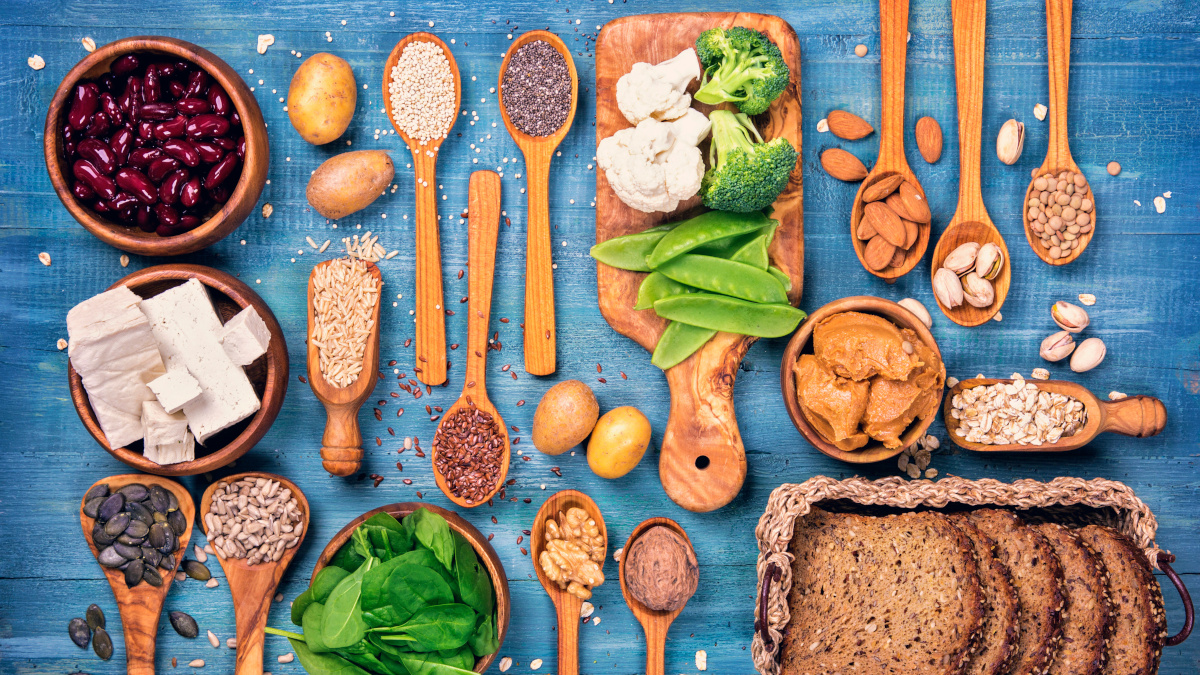
The plant kingdom is packed with high-quality proteins
Like all living organisms, plants contain proteins. They fulfil in plants the same type of function as they do in animals: enzymatic (they catalyse reactions), structural, mobility, cell communication, etc.
It’s proteins, for example, which determine when trees shed their leaves and how plants defend themselves against attack, as well as facilitating absorption of nutrients essential to the growth of the plant or its fruit, etc. (1-3)
For anyone keen to increase their daily protein intake, or reduce their consumption of animal-source protein (for ethical or environmental reasons), it’s thus important to know which foods are high in plant proteins.
As a reminder, daily protein intake, depending on age, objectives and level of physical activity, should be between 0.8g per kilo of bodyweight and 2g per kilo of bodyweight (the latter when building muscle mass for example) (4).
The best dietary sources of plant proteins
Given that plant proteins play a fundamental role in the development, growth and death of plants, the highest amounts are usually found in seeds (with a few exceptions: spirulina, klamath algae, moringa leaves ...)
The best plant protein sources are: (5-8)
- spirulina, which contains 65g of protein per 100g and is particularly popular with vegetarians and vegans as a source of plant proteins. It’s usually consumed in tablet form, which is also good for energy and immunity (one option being the supplement Spirulina) ;
- Klamath blue-green algae (AFA), with 63g of protein per 100g and which importantly, is the only plant source of vitamin B12, making it invaluable for vegans. With a high content of PEA, it’s also popular for its positive effects on mood (it’s the substance in the supplement AFA Extract) ;
- soya, containing 36g per 100g, which can be consumed in the form of tofu and sprouted seeds, etc.;
- moringa, which contains 27g per 100g, but which is hard to find in Europe in the form of leaves for use in cooking. However, many people choose to consume it in supplement form to help control their blood sugar levels (Organic Moringa leaf extract, for example) ;
- hemp seeds, lentils, pumpkin seeds, peanuts, kidney beans, broad beans, split peas, chickpeas, etc. which contain between 20g and 26g of protein per 100g and which should really form the basis of a vegetarian diet rich in protein, fibre, minerals and trace-elements;
- oats, which contain an average 16g of protein per 100g and which offer the additional advantage of having a low glycaemic index whilst being very fortifying, making them the perfect choice for a vegan breakfast high in plant proteins;
- spelt and buckwheat, which contain between 13g and 15g of protein per 100g;
- quinoa, which contains 14g of protein per 100g;
The aim is to vary your plant protein sources over a week to create balanced meals from a variety of seeds, nuts, grains and pulses.
Vegetarian recipes to ensure a good intake of essential amino acids
Above all, however, we need to obtain specific amino acids from the protein we consume. Amino acids are actually the building blocks of proteins. While the body is able to produce 11 of them itself, 9 have to be obtained from the diet: tryptophan, lysine, methionine, phenylalanine, threonine, valine, leucine, isoleucine and histidine (9).
The problem is that these essential amino acids are not uniformly present in all plant proteins. That’s why it’s always best to combine cereals with pulses. Apart from being more digestible, this combination delivers a balanced intake of essential amino acids: the pulses offer amino acids not provided by the cereals, and vice versa.
Here are some very simple vegetarian or vegan combinations/recipes: rice (cereal) with lentils (pulses) ; corn (cereal) with kidney beans (pulses); oats (cereal) with soya (pulses)... all of which you can mix with sauteed pumpkin seeds or chopped peanuts (seeds), or sprinkle with chopped pistachios, almonds or walnuts (nuts).
Vegetarians, though not vegans, also have the option of taking a daily dose of whey protein, whey being a by-product of cheese production. Whey protein contains all the essential amino acids in sufficient quantities to meet the body’s needs (10).
References
- ROUTT, Sheri M. et BANKAITIS, Vytas A. Biological functions of phosphatidylinositol transfer proteins. Biochemistry and cell biology, 2004, vol. 82, no 1, p. 254-262.
- JAILLAIS, Yvon. Fonctions du rétromère dans le trafic de protéines, la polarité cellulaire et le développement d’Arabidopsis. 2007. Thèse de doctorat. Lyon, École normale supérieure (sciences).
- LANDRY, Jacques et HUOT, Jacques. Modulation of actin dynamics during stress and physiological stimulation by a signaling pathway involving p38 MAP kinase and heat-shock protein 27. Biochemistry and Cell Biology, 1995, vol. 73, no 9-10, p. 703-707.
- DEUTZ, Nicolaas EP, BAUER, Jürgen M., BARAZZONI, Rocco, et al.Protein intake and exercise for optimal muscle function with aging: recommendations from the ESPEN Expert Group. Clinical nutrition, 2014, vol. 33, no 6, p. 929-936.
- GUÉGUEN, Jacques, WALRAND, Stéphane, et BOURGEOIS, Oriane. Les protéines végétales: contexte et potentiels en alimentation humaine. Cahiers de Nutrition et de Diététique, 2016, vol. 51, no 4, p. 177-185.
- REMOND, Didier. Quelles spécificités et complémentarités nutritionnelles des aliments sources de protéines végétales et animales?. In : Journées Francophones de Nutrition. 2020.
- WALRAND, Stéphane, COXAM, Veronique, MORAND, Christine, et al.Rechercher les qualités nutritionnelles des protéines végétales. In : Les rencontres de l'Inra au salon de l'agriculture. 2013.
- CHARDIGNY, Jean-Michel. Les protéines végétales pour l’alimentation humaine.
- ROGERS, Quinton et LEUNG, P. MB. The influence of amino acids on the neuroregulation of food intake. In : Federation proceedings. 1973. p. 1709-1719.
- HA, Ewan et ZEMEL, Michael B. Functional properties of whey, whey components, and essential amino acids: mechanisms underlying health benefits for active people. The Journal of nutritional biochemistry, 2003, vol. 14, no 5, p. 251-258.
Keywords





88 Days
Fast delivery
Fast delivery, no hassle
Trusted
92 Days
Great product
Great product, quick delivery
Jamal
95 Days
Very good helps me everytime
Very good helps me everytime
TAMMINEN Liis
97 Days
it helps a lot on digestion
it helps a lot on digestion
Elisa Fleury
103 Days
Super fast delivery
Super fast delivery. Trying flexismart at the moment, Maybe a bit too soon to see results bit nice tolérance so far.
Maria Angeles Verdu
103 Days
Good service
Supersmart are an efficient company - the order arrived quickly. This is usual for them, though they have occasionally been let down by delivery firms - not a surprise and not their fault.
Barry Humphries
104 Days
Excellent product
Excellent product, quick delivery
FERENCNE Soros
106 Days
High quality, reliable service!
I have been ordering their products for years! They are excellent quality. And despite the international shipping, my order allways arrived pretty fast. The loyalty program is very fair, I get great prices on the products. Imagine: my specialists are asking me what have I been taking that my counts are so good!
Petra Hruskova
107 Days
I purchased Melatonin
I purchased Melatonin, very quick delivery to the UK and product is perfect. Very Happy
Dean Harriss
109 Days
Avis général
Well boxes are white but that puts a bit of serious color for my grey matter. Supersmart is quality products and made myself a pharmacy. Honestly should be remboursed by the health institutes selling pills
LEBORDAIS Thomas
110 Days
Arrives in just five days even to Japan…
Arrives in just five days even to Japan – that’s insanely fast! Amazing lineup of innovative products.
namio
113 Days
Quality and choice of supplements.
Quality and choice of supplements.
Maja
117 Days
perfect great
perfect great
igor janic
122 Days
Good products and speedy delivery
Good products and speedy delivery
Jim
126 Days
Very good
Very good, fast delivery
Paddy
of experience
your money back
##montant## purchase