
Sources of protein: which foods, which supplements
Which foods and supplements provide the most protein? Check out our list of the best animal and plant protein sources to help you maintain muscle mass and good overall health


Protein: definition and risks of deficiency
What are proteins and what role do they play in the body?
Like carbohydrates and fats, proteins are macromolecules which the body needs in order to function properly.
They are made up of twenty types of amino acid, 9 of which are termed ‘essential’ as the body is unable to produce them itself and must obtain them from the diet.
Each type of protein has a specific structure which determines its function: it may, for example, play a role in cell structure, regulation of biological functions, growth, tissue renewal, or muscle repair…
What are the potential health risks of an inadequate protein intake?
A lack of protein in the diet can have serious consequences for health: muscle wasting, general weakness, immune disorders, slow wound-healing, deficiencies in enzymes and hormones, etc.
In sportspeople in particular, insufficient protein intake can not only lead to loss of muscle mass, but also slower post-training recovery and an increased risk of injury.
For those over 50, a lack of protein is of particular concern as our protein needs increase with age, in order to maintain muscle mass and prevent sarcopenia (age-related muscle loss). However, protein consumption starts to fall from the age of 60 in Western populations, and this can result in impaired mobility, a greater risk of falls and increased vulnerability to infection…
Animal and plant protein – what’s the difference?
Animal protein is better at meeting our needs for amino acids and is more digestible (the presence of certain compounds reduces the absorption of plant-source amino acids).
With plant protein, you often need to combine several different sources to achieve a comprehensive and balanced intake. Having said that, plant protein foods are generally healthier (antioxidants, healthy fats, dietary fibre…)
Which animal-source foods contain protein?
Animal protein is primarily found in meat, fish, dairy products and eggs.
Below is a list of the 20 best sources of animal protein, with their particular characteristics, starting with the no. 1 source (1-2):
- whey – around 80g-90g of protein per 100g, depending on the type of whey. Derived from cow’s milk, whey protein powder contains all the essential amino acids and is rapidly absorbed by the body (it’s best to opt for a native whey isolate such as Native Whey Protein Isolate). We’ll return to it in more detail later;
- chicken (thigh, skin on, roasted) – 26.3g per 100g. Source of high biological value protein with a balanced amino acid profile;
- beef (lean meat) – 26g per 100g. Excellent source of haem iron, essential for red blood cell formation;
- pork (lean chop, grilled) – 25g per 100g. Lean pork is rich in protein as well as in the B group vitamins, zinc and selenium;
- duck (meat, roasted) – 25g per 100g. Rich in unsaturated fatty acids good for cardiovascular health;
- lamb (leg, roasted) – 25g per 100g. Important source of zinc and iron;
- sardines (canned) – 25g per 100g. Also an excellent source of omega-3, calcium (with bones), vitamin D and selenium;
- shrimps (cooked) – 24g per 100g. Low in fat, they are also rich in iodine and other essential minerals;
- turkey (white meat) – 24g per 100g. Low in fat, and often used in protein diets;
- tuna (canned) – 23g per 100g. Key source of omega-3 and vitamin D, good for heart health;
- salmon (oily fish) – 23g per 100g. Rich in omega-3 fatty acids, essential for heart and brain health;
- rabbit (lean meat) – 21g per 100g. Very low in fat and rich in vitamins B3 and B12;
- mussels (cooked) – 20.2g per 100g. Very high in iron and vitamin B12, and a good, low-calorie source of protein;
- calves’ liver – 20g per 100g. Very high in vitamins A and B12, important for vision and energy production;
- cooked ham – 18.5g per 100g. Low in saturated fat, though most cooked ham contains nitrites;
- cod (white fish) – 18g per 100g. Very low in fat and calories with a good protein content;
- 2 whole eggs – 12.6g of protein. Provides a complete amino acid profile with essential nutrients such as vitamin B12;
- hard cheeses – 12g per 30g. Also a source of calcium, but contain unhealthy saturated fats;
- fromage blanc – 8.1g per 100g. Low in fat, major source of casein, a slow-digesting protein, excellent for muscle recovery;
- 1 whole milk natural yogurt – 3.6g of protein. Source of calcium and probiotics, good for digestive health.
Which plant-based foods contain protein?
Plant protein is found in a wide variety of foods such as pulses (lentils, chickpeas, beans…), nuts and oilseeds (almonds, walnuts …) and cereals (rice, wheat, quinoa…)
These plant-based foods often have less protein than their animal-source counterparts but they offer additional benefits, such as a higher content of fibre and micronutrients, a lower content of saturated fats and less impact on the environment.
Below is a list of the 20 best plant protein foods, with their particular characteristics (3-4).
Note that as some of these foods are eaten in very small quantities, it’s important to take into account the size of the portions consumed (we normally eat a much larger quantity of quinoa than we do of almonds, for example, and we therefore obtain more protein from quinoa):
- dried spirulina (blue-green algae) – 57g of protein per 100g. Spirulina is a type of blue-green micro-algae which is extremely high in protein, as well as in vitamins and minerals (it is available in supplement form such as the product Spirulina). However, it is usually consumed in very small quantities and cannot replace protein sources eaten in larger amounts;
- deactivated nutritional yeast (a vegan alternative to cheese) – 40g-50g per 100g. Popular with vegans, it contains all the essential amino acids and is often fortified with vitamin B12;
- soya (pulses) – 36g per 100g. Contains all the essential amino acids and is easily absorbed, though it should be consumed in moderation as it contains a significant amount of phytoestrogens;
- hemp seeds (oilseeds) – 31g per 100g. Contain all the essential amino acids, high levels of omega-3 and omega-6, and are easily digested;
- peanuts (nuts) – 25g per 100g. High in protein but lacking in certain essential amino acids, so should be combined with cereals;
- almonds (nuts) – 21g per 100g. High in protein but lacking in certain essential amino acids;
- sunflower seeds (oilseeds) – 21g per 100g. Also contain vitamins and minerals like magnesium, but lacking in certain essential amino acids;
- pea flour (pulses) – 20g per 100g. A concentrated source of plant protein but often consumed in small amounts;
- pumpkin seeds (oilseeds) – 19g per 100g. Contain a good level of minerals (magnesium, zinc …) but lacking in lysine;
- cashew nuts (nuts) – 19g per 100g. Lacking in sulfur-containing amino acids, should be combined with pulses;
- chia or flax seeds (oilseeds) – 17g-18g per 100g. Also high in fibre, omega-3 and antioxidants, but often consumed in small quantities;
- cooked chickpeas (pulses) – 9g per 100g. High in fibre and magnesium but lacking in methionine;
- cooked kidney beans (pulses) – 8g per 100g.;
- cooked lentils (pulses) – 8g per 100g. High in fibre and iron but lacking in sulfur-containing amino acids;
- cooked edible lupins (pulses) – 8g per 100g. High in digestible protein but lacking in methionine;
- cooked split peas (pulses) – 8g per 100g. Good source of fibre but lacking in certain amino acids;
- cooked brown rice (cereals) – 7g per 100g. Low in lysine but high in fibre, should be combined with pulses for full range of amino acids;
- cooked quinoa (pseudo-cereals) – 5g per 100g. Contains all the essential amino acids and easily digestible;
- cooked rye (cereals) – 3-4g per 100g. Good source of fibre but low in lysine;
- cooked wheat (cereals) – 3-4g per 100g. Mainly in the form of gluten, lacking in certain amino acids.
Apart from nuts, fruits do not have a very high protein content, usually less than 2g per 100g.
Which protein supplements should you opt for?
Benefits of protein supplements
Given the range and abundance of animal and plant protein sources, it’s not essential to take protein supplements in order to increase muscle mass or prevent sarcopenia… but they can be a valuable aid to doing so.
It is actually cheaper and easier for a sportsperson to take two scoops of whey, ie, 30g of protein, straight after a training session (during the ‘metabolic window’) than to eat a cod fillet or a steak.
When choosing a supplement, take into account its quality, speed of absorption, and amino acid content, and potentially, your specific needs for certain amino acids.
Whey, a major source of protein
Already mentioned in our list of animal protein-rich sources, whey can be considered both a food (it can be added to dishes or drinks) and as the best-known sports supplement.
It is often favoured by athletes (and especially body-builders) for its easy digestibility and complete profile of essential amino acids.
Of the various kinds of whey available, native whey isolate stands out quality-wise as it contains a higher level of protein, which is also more undenatured (as it comes directly from cow’s milk and not from cheese industry by-products), as well as being low in fat, carbohydrates and lactose (discover the excellent whey powder Native Whey Protein Isolate).
The role of BCAAs (branched-chain amino acids)
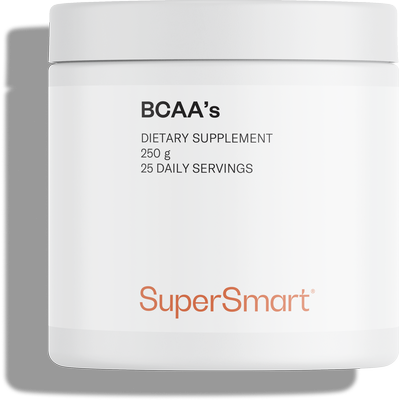
Branched-chain amino acids or BCAAs are not proteins as such, but amino acids (leucine, isoleucine and valine), in other words, the ‘ building blocks’ directly involved in muscle protein synthesis.
BCAA supplements are particularly popular with those engaged in high-intensity exercise (try, for example, the supplement BCAAs).
Other supplements with a high content of specific proteins
Below are some other proteins and amino acids available in the form of dietary supplements:
- collagen: this structural protein is found in the skin, tendons, bones, cartilage, etc. Collagen supplements are therefore particularly suited to anyone concerned about their skin or joint health (examples include Marine Collagen, Premium Collagen Shots and UC II®);
- lysine: this amino acid, often lacking in cereals, is important for muscle growth (try the supplement L-Lysine);
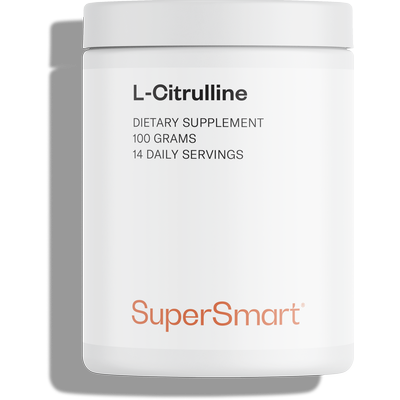
- citrulline: this amino acid is especially popular for its ability to support nitric oxide production, vasodilation and thus increased blood flow and physical performance (see the product L-Citrulline);
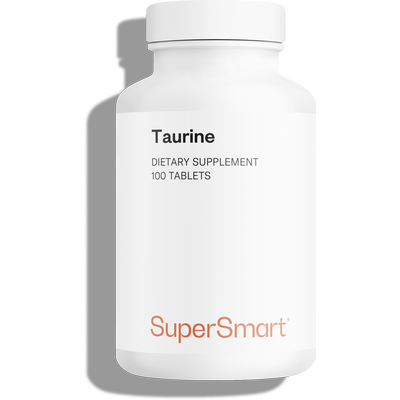
- taurine: this amino acid provides natural support to muscle, nerve and cardiovascular function (discover the supplement Taurine);
- creatine: this amino acid derivative is particularly popular with athletes focusing on strength, power and muscle development (see 3-Creatine);
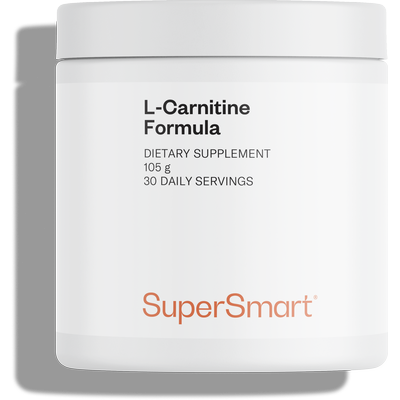
- carnitine: this amino acid targets the transport of fatty acids to mitochondria for use as energy, prolonging endurance (see L-Carnitine Formula);
- bone morphogenetic proteins (BMP): these very specific proteins play an essential role in forming and regenerating bone and cartilage (you can find them in the supplement Bone Morphogenetic Proteins).
Reminder of individual protein requirements
As a reminder, we’ve listed below the protein needs of several types of individual:
- sedentary adults: 0.8g/kg/day, ie, 64g for a person weighing 80kg;
- endurance athletes: 1.0-1.4g/kg/day depending on the level of training, ie, 80g-112g for a person weighing 80kg;
- strength athletes: 1.3-1.5g/kg/jour, ie, 104g-120g for a person weighing 80kg. When the aim is to increase muscle mass, these requirements may increase to 2-2.2g/kg/day, ie, 160g-176g of protein;
- and sedentary individuals aged 60 plus: 1g/kg/day, ie, 80g for a person weighing 80kg.
SUPERSMART ADVICE
References
- Ferrari L, Panaite SA, Bertazzo A, Visioli F. Animal- and Plant-Based Protein Sources: A Scoping Review of Human Health Outcomes and Environmental Impact. 2022 Dec 1;14(23):5115. doi: 10.3390/nu14235115. PMID: 36501146; PMCID: PMC9741334.
- Agence nationale de sécurité sanitaire, de l'alimentation, de l'environnement et du travail (Anses),Table de composition nutritionnelle des aliments Ciqual, Ciqual. (s. d.). 2020. [https://ciqual.anses.fr/]
- Ferrari L, Panaite SA, Bertazzo A, Visioli F. Animal- and Plant-Based Protein Sources: A Scoping Review of Human Health Outcomes and Environmental Impact. Nutrients. 2022 Dec 1;14(23):5115. doi: 10.3390/nu14235115. PMID: 36501146; PMCID: PMC9741334.
- Agence nationale de sécurité sanitaire, de l'alimentation, de l'environnement et du travail (Anses),Table de composition nutritionnelle des aliments Ciqual, Ciqual. (s. d.). 2020. [https://ciqual.anses.fr/]



88 Days
Fast delivery
Fast delivery, no hassle
Trusted
92 Days
Great product
Great product, quick delivery
Jamal
95 Days
Very good helps me everytime
Very good helps me everytime
TAMMINEN Liis
97 Days
it helps a lot on digestion
it helps a lot on digestion
Elisa Fleury
103 Days
Super fast delivery
Super fast delivery. Trying flexismart at the moment, Maybe a bit too soon to see results bit nice tolérance so far.
Maria Angeles Verdu
103 Days
Good service
Supersmart are an efficient company - the order arrived quickly. This is usual for them, though they have occasionally been let down by delivery firms - not a surprise and not their fault.
Barry Humphries
104 Days
Excellent product
Excellent product, quick delivery
FERENCNE Soros
106 Days
High quality, reliable service!
I have been ordering their products for years! They are excellent quality. And despite the international shipping, my order allways arrived pretty fast. The loyalty program is very fair, I get great prices on the products. Imagine: my specialists are asking me what have I been taking that my counts are so good!
Petra Hruskova
107 Days
I purchased Melatonin
I purchased Melatonin, very quick delivery to the UK and product is perfect. Very Happy
Dean Harriss
109 Days
Avis général
Well boxes are white but that puts a bit of serious color for my grey matter. Supersmart is quality products and made myself a pharmacy. Honestly should be remboursed by the health institutes selling pills
LEBORDAIS Thomas
110 Days
Arrives in just five days even to Japan…
Arrives in just five days even to Japan – that’s insanely fast! Amazing lineup of innovative products.
namio
113 Days
Quality and choice of supplements.
Quality and choice of supplements.
Maja
117 Days
perfect great
perfect great
igor janic
122 Days
Good products and speedy delivery
Good products and speedy delivery
Jim
126 Days
Very good
Very good, fast delivery
Paddy
of experience
your money back
##montant## purchase