
Lysine: what benefits for the body and recovery?
Lysine is an essential amino acid that is involved in various processes within the human body. Find out why it is so valuable to the body and when lysine supplementation can be useful.


What is lysine?
Lysine is an essential amino acid.
This means that the body cannot synthesise it itself, even though it needs it. It must therefore be obtained from the diet.
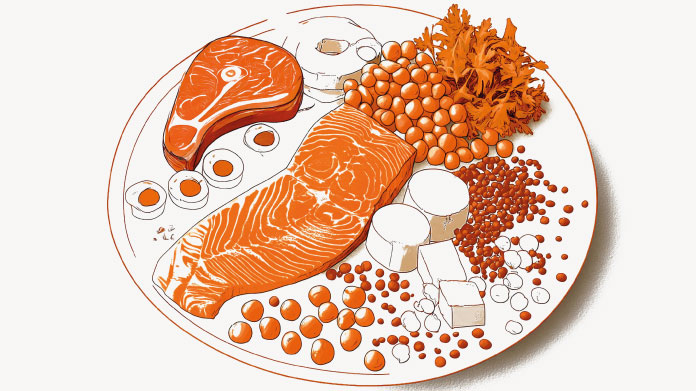
Lysine is found in foods rich in animal proteins (meat, fish, eggs, dairy products, etc.), in certain foods rich in plant proteins (lentils, kidney beans, quinoa, etc.) and in nutritional supplements (capsules, tablets, powder) that are particularly popular with sportspeople.
Lysine is known to be a component of structural proteins such as collagen.
The various benefits of lysine
Support for muscle recovery
One of the best-known actions of lysine in the human body is its role in muscle recovery.
Amino acids are the basic building blocks of protein and, as an essential amino acid, lysine is involved in the synthesis of the proteins that make up muscles.
As such, it is thought to promote the repair of damaged muscle fibres after intense physical effort. It therefore supports recovery after training, a competition or a demanding physical activity.
In addition, studies show that it also helps to reduce muscle catabolism, i.e. the breakdown of muscles subjected to major effort (2), particularly in situations of stress or overtraining.
These properties explain why lysine consumption is so popular in sport.
Role in collagen production
In the human body, lysine is directly involved in the formation of collagen. This protein is essential for the formation and structure of connective tissue (skin, tendons, ligaments, cartilage, bones).
Lysine acts as a cofactor in reactions involving the enzymes that stabilise collagen fibres and guarantee their strength and elasticity (3).
This process is particularly important for promoting wound healing, joint health and skin tone.
In the event of lysine deficiency or increased needs (ageing, injuries, surgery), supplementation is therefore recommended to promote better tissue regeneration.
Contributes to calcium absorption
From a biological point of view, it has long been known that lysine plays a role in bone metabolism by facilitating calcium absorption in the intestines (4).
A good intake of calcium helps to maintain normal bones and teeth, particularly in growing children.
In combination with vitamin D, it also helps to reduce bone demineralisation in post-menopausal women at risk of osteoporotic fractures (due to osteoporosis).
In fact, research has shown that the combination of lysine and calcium could improve calcium absorption in the bones, while limiting its loss (5).
Support for the immune system
Lysine is also involved in various immune processes.
In particular, it is thought to play a part in the proper functioning of lymphocytes and in the body's defence against microbes, viruses and allergens.
According to some studies, in association with arginine, it could also reduce the production of cortisol (6), a hormone produced in the event of stress and anxiety, which has an immunosuppressive effect (in other words, it reduces the immune defences).
Potential benefits of lysine against herpes
Lysine is also being studied for its potential properties in the fight against the herpes simplex virus (HSV), which is responsible in particular for cold sores (7).
In our bodies, lysine competes with arginine, an amino acid that the virus needs to replicate. So, by increasing lysine intake and reducing arginine intake, we could theoretically limit outbreaks of herpes.
Several studies have suggested that lysine supplementation at a dose of 1 to 3 g/day can reduce the frequency, duration and severity of herpes outbreaks (8).
Targeted supplementation of lysine intake
Although lysine is present in many foods rich in animal or plant proteins, some people may have inadequate intakes or increased needs.
This may, for example, be the case for people following a vegetarian or vegan diet, if they do not pay sufficient attention to their nutritional balance. It is also the case if the diet is unbalanced.
Individuals undergoing periods of intense fatigue, high stress, convalescence or high levels of physical activity may also have higher lysine requirements.
In these situations, lysine supplementation can be a useful addition to the diet, to support the body's specific needs.
Using a quality lysine supplement ensures a targeted intake of this nutrient, with a clearly defined daily dose. As such, it offers more precise intakes than food alone.
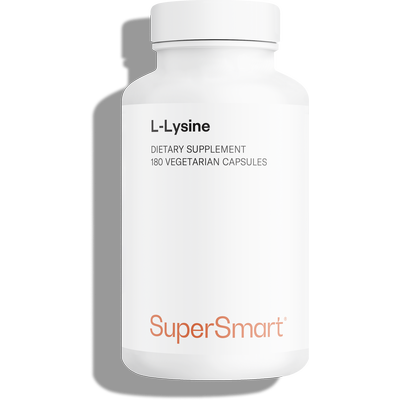
- Discover L-Lysine food supplement in vegetarian capsules, containing the amino acid in its natural form.
SUPERSMART ADVICE
References
- Matthews DE. Review of Lysine Metabolism with a Focus on Humans. J Nutr. 2020 Oct 1;150(Suppl 1):2548S-2555S. doi: 10.1093/jn/nxaa224. PMID: 33000162.
- Sato T, Ito Y, Nagasawa T. Lysine suppresses myofibrillar protein degradation by regulating the autophagic-lysosomal system through phosphorylation of Akt in C2C12 cells. 2014 Oct 8;3:584. doi: 10.1186/2193-1801-3-584. PMID: 25332884; PMCID: PMC4197202.
- Liu X, Dan N, Dan W. Insight into the collagen assembly in the presence of lysine and glutamic acid: An in vitro study. Mater Sci Eng C Mater Biol Appl. 2017 Jan 1;70(Pt 1):689-700. doi: 10.1016/j.msec.2016.09.037. Epub 2016 Sep 22. PMID: 27770943.
- Civitelli R, Villareal DT, Agnusdei D, Nardi P, Avioli LV, Gennari C. Dietary L-lysine and calcium metabolism in humans. 1992 Nov-Dec;8(6):400-5. PMID: 1486246.
- Liang B, Shi X, Wang X, Ma C, Leslie WD, Lix LM, Shi X, Kan B, Yang S. Association between amino acids and recent osteoporotic fracture: a matched incident case-control study. Front Nutr. 2024 Mar 19;11:1360959. doi: 10.3389/fnut.2024.1360959. PMID: 38567247; PMCID: PMC10985241.
- Smriga M, Ando T, Akutsu M, Furukawa Y, Miwa K, Morinaga Y. Oral treatment with L-lysine and L-arginine reduces anxiety and basal cortisol levels in healthy humans. Biomed Res. 2007 Apr;28(2):85-90. doi: 10.2220/biomedres.28.85. PMID: 17510493.
- Chang JY, Balch C, Puccio J, Oh HS. A Narrative Review of Alternative Symptomatic Treatments for Herpes Simplex Virus. 2023 Jun 2;15(6):1314. doi: 10.3390/v15061314. PMID: 37376614; PMCID: PMC10301284.
- Mailoo VJ, Rampes S. Lysine for Herpes Simplex Prophylaxis: A Review of the Evidence. Integr Med (Encinitas). 2017 Jun;16(3):42-46. PMID: 30881246; PMCID: PMC6419779.
Keywords


88 Days
Fast delivery
Fast delivery, no hassle
Trusted
92 Days
Great product
Great product, quick delivery
Jamal
95 Days
Very good helps me everytime
Very good helps me everytime
TAMMINEN Liis
97 Days
it helps a lot on digestion
it helps a lot on digestion
Elisa Fleury
103 Days
Super fast delivery
Super fast delivery. Trying flexismart at the moment, Maybe a bit too soon to see results bit nice tolérance so far.
Maria Angeles Verdu
103 Days
Good service
Supersmart are an efficient company - the order arrived quickly. This is usual for them, though they have occasionally been let down by delivery firms - not a surprise and not their fault.
Barry Humphries
104 Days
Excellent product
Excellent product, quick delivery
FERENCNE Soros
106 Days
High quality, reliable service!
I have been ordering their products for years! They are excellent quality. And despite the international shipping, my order allways arrived pretty fast. The loyalty program is very fair, I get great prices on the products. Imagine: my specialists are asking me what have I been taking that my counts are so good!
Petra Hruskova
107 Days
I purchased Melatonin
I purchased Melatonin, very quick delivery to the UK and product is perfect. Very Happy
Dean Harriss
109 Days
Avis général
Well boxes are white but that puts a bit of serious color for my grey matter. Supersmart is quality products and made myself a pharmacy. Honestly should be remboursed by the health institutes selling pills
LEBORDAIS Thomas
110 Days
Arrives in just five days even to Japan…
Arrives in just five days even to Japan – that’s insanely fast! Amazing lineup of innovative products.
namio
113 Days
Quality and choice of supplements.
Quality and choice of supplements.
Maja
117 Days
perfect great
perfect great
igor janic
122 Days
Good products and speedy delivery
Good products and speedy delivery
Jim
126 Days
Very good
Very good, fast delivery
Paddy
of experience
your money back
##montant## purchase