
Hyaluronic acid supplements: why take them?
Known for its use in cosmetic surgery, hyaluronic acid is first and foremost a major component of the body. What exactly does it do when taken as a supplement?


What is hyaluronic acid?
First isolated in 1934 by the biochemist Karl Mayer from the vitreous humour of bulls’ eyes, hyaluronic acid, or hyaluronan, is a polysaccharide (complex carbohydrate) naturally present in the human body –and in animal tissues in general (1). More specifically, it’s the product of combining a uronic acid with an aminoglycan.
In humans, it’s an essential component of the extracellular matrix, which provides structural and biochemical support to our cells (2). It’s primarily found in the dermis (the skin layer beneath the epidermis), as well as in the eyes, connective tissue and synovial fluid, the role of which is to reduce friction in the joints (3).
In its pure form, hyaluronic acid has an interesting characteristic: it is not species- or tissue-specific. Its formula is therefore common to all living organisms, which explains its excellent tolerance when injected or taken as a dietary supplement, regardless of its origin (4).
What benefits does hyaluronic acid offer?
A revolution in cosmetic medicine
Hyaluronic acid has been attracting huge attention in the field of cosmetic medicine since it expanded the range of injectable products available, at the end of the 1990s. Completely safe with very few side effects, it is widely acclaimed by practitioners for use in facial contouring or correcting asymmetries (5).
With remarkable viscoelastic and hydrophilic properties, hyaluronic acid is able to retain water, and swells when it comes into contact with it (6). In this way, it fills empty intercellular spaces and provides cohesion to tissues, properties which give the skin a smooth, plumped-up appearance (7). It remains the most widely-used cosmetic facial filler today, having overtaken injectable collagen.
In a less cross-linked (and more fluid) form, hyaluronic acid also features in various minimally-invasive medical-aesthetic facial procedures such as mesotherapy, and more recently, Skinbooster (8). Highly popular for the immediate glow they bring, they also offer increased suppleness and firmness.
A key compound of the joints
Hyaluronic acid’s applications are not restricted to the cosmetic field. The substance is also used within certain types of ophthalmologic or ENT surgery, as well as in rheumatology (9).
In fact, hyaluronic acid is an integral part of cartilage and especially synovial fluid - it alone maintains the latter’s elasticity and viscosity (10-12). Secreted by chondrocytes and synoviocytes, this yellowish fluid cushions friction between moving joints (knees, elbows …). Studies have also highlighted lower concentrations of hyaluronic acid at these sites in subjects suffering from joint problems (13).
A defensive agent
Hyaluronic acid is not an inert component: it is also actively involved in various physiological processes. Indeed, several studies are investigating its role in the mechanism of healing, as well as its interaction with inflammatory mediators and immune cells (particularly in cases of physical trauma) (14).
The best hyaluronic acid supplements
Over time, production of hyaluronic acid tends to decline (15). Depending on the individual, this can manifest in duller or more flaccid skin, morning stiffness or difficulty carrying out daily activities (climbing the stairs, gardening …). It can therefore be helpful to take a supplement, making sure you choose the most suitable formulation for your particular needs.
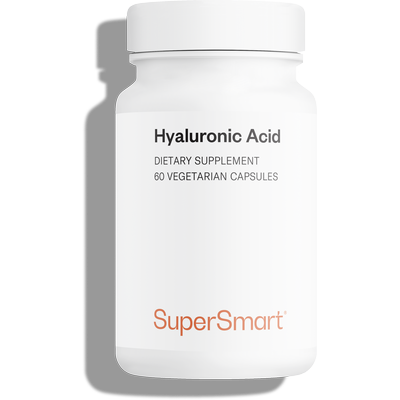
The form of hyaluronic acid found in the joints has a very high molecular weight (of over 1 million Daltons), sodium hyaluronate. For a concentrated effect in this area, it’s therefore important to opt for a hyaluronic acid supplement of at least equivalent weight (the vegetarian supplement Hyaluronic Acid, obtained from bacterial fermentation, has a molecular weight of 1.2 million Daltons) (16).
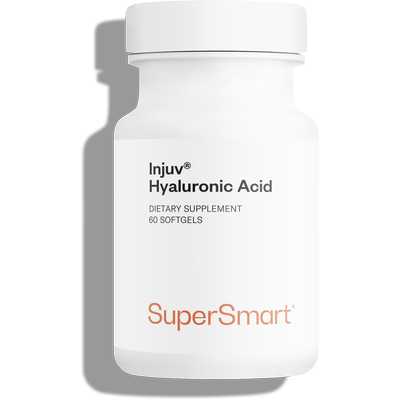
If, however, the objective is beautiful skin, it’s best to choose a low molecular weight supplement: the small molecule size enables it to penetrate deep into skin tissues (thanks to a cutting-edge enzymatic technique, the patented supplement Injuv® Hyaluronic Acid has an unusually low molecular weight, without being in any way chemically altered) (17).
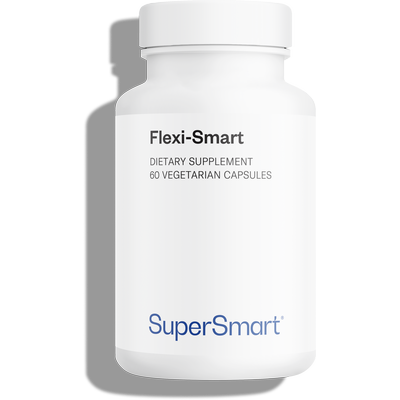
There are also synergistic formulations that combine hyaluronic acid with various plant extracts known for their affinity with the joints, such as Boswellia serrata which helps reduce joint discomfort (in addition to these two compounds, the innovative formulation Flexi-Smart contains standardised avocado soy unsaponifiables which provide a significant amount of phytosterols for maximum efficacy) (18-19).
Le conseil SuperSmart
References
- Walker K, Basehore BM, Goyal A, et al. Hyaluronic Acid. [Updated 2022 Aug 25]. In: StatPearls [Internet]. Treasure Island (FL): StatPearls Publishing; 2022 Jan-. Available from: https://www.ncbi.nlm.nih.gov/books/NBK482440/
- Amorim S, Reis CA, Reis RL, Pires RA. Extracellular Matrix Mimics Using Hyaluronan-Based Biomaterials. Trends Biotechnol. 2021 Jan;39(1):90-104. doi: 10.1016/j.tibtech.2020.06.003. Epub 2020 Jul 9. PMID: 32654775.
- Gupta RC, Lall R, Srivastava A, Sinha A. Hyaluronic Acid: Molecular Mechanisms and Therapeutic Trajectory. Front Vet Sci. 2019 Jun 25;6:192. doi: 10.3389/fvets.2019.00192. PMID: 31294035; PMCID: PMC6603175.
- Becker LC, Bergfeld WF, Belsito DV, Klaassen CD, Marks JG Jr, Shank RC, Slaga TJ, Snyder PW; Cosmetic Ingredient Review Expert Panel, Andersen FA. Final report of the safety assessment of hyaluronic acid, potassium hyaluronate, and sodium hyaluronate. Int J Toxicol. 2009 Jul-Aug;28(4 Suppl):5-67. doi: 10.1177/1091581809337738. PMID: 19636067.
- Becker LC, Bergfeld WF, Belsito DV, Klaassen CD, Marks JG Jr, Shank RC, Slaga TJ, Snyder PW; Cosmetic Ingredient Review Expert Panel, Andersen FA. Final report of the safety assessment of hyaluronic acid, potassium hyaluronate, and sodium hyaluronate. Int J Toxicol. 2009 Jul-Aug;28(4 Suppl):5-67. doi: 10.1177/1091581809337738. PMID : 19636067.
- Masson F. Acide hyaluronique et hydratation cutanée [Skin hydration and hyaluronic acid]. Ann Dermatol Venereol. 2010 Apr;137 Suppl 1:S23-5. French. doi: 10.1016/S0151-9638(10)70005-3. PMID: 20435251.
- Dai X, Li L, Peterson W, Baumgartner RR, Huang J, Baer-Zwick A, Hoeller S, Ivezic-Schoenfeld Z, Prinz M. Safety and effectiveness of hyaluronic acid dermal filler in correction of moderate-to-severe nasolabial folds in Chinese subjects. Clin Cosmet Investig Dermatol. 2019 Jan 14;12:57-62. doi: 10.2147/CCID.S187079. PMID: 30666143; PMCID: PMC6336025.
- Ayatollahi A, Firooz A, Samadi A. Evaluation of safety and efficacy of booster injections of hyaluronic acid in improving the facial skin quality. J Cosmet Dermatol. 2020 Sep;19(9):2267-2272. doi: 10.1111/jocd.13493. Epub 2020 May 30. PMID: 32419355.
- Maheu E, Rannou F, Reginster JY. Efficacy and safety of hyaluronic acid in the management of osteoarthritis: Evidence from real-life setting trials and surveys. Semin Arthritis Rheum. 2016 Feb;45(4 Suppl):S28-33. doi : 10.1016/j.semarthrit.2015.11.008. Epub 2015 Dec 2. PMID: 26806183.
- Bagga H, Burkhardt D, Sambrook P, March L. Longterm effects of intraarticular hyaluronan on synovial fluid in osteoarthritis of the knee. J Rheumatol. 2006 May;33(5):946-50. PMID: 16652425.
- Maheu E, Rannou F, Reginster JY. Efficacy and safety of hyaluronic acid in the management of osteoarthritis: Evidence from real-life setting trials and surveys. Semin Arthritis Rheum. 2016 Feb;45(4 Suppl):S28-33. doi : 10.1016/j.semarthrit.2015.11.008. Epub 2015 Dec 2. PMID: 26806183.
- Vincent HK, Percival SS, Conrad BP, Seay AN, Montero C, Vincent KR. Hyaluronic Acid (HA) Viscosupplementation on Synovial Fluid Inflammation in Knee Osteoarthritis: A Pilot Study. Open Orthop J. 2013 Sep 20;7:378-84. doi: 10.2174/1874325001307010378. PMID: 24093052; PMCID: PMC3788189.
- Migliore A, Procopio S. Effectiveness and utility of hyaluronic acid in osteoarthritis. Clin Cases Miner Bone Metab. 2015 Jan-Apr;12(1):31-3. doi: 10.11138/ccmbm/2015.12.1.031. PMID: 26136793; PMCID: PMC4469223.
- Marinho A, Nunes C, Reis S. Hyaluronic Acid: A Key Ingredient in the Therapy of Inflammation. 2021 Oct 15;11(10):1518. doi: 10.3390/biom11101518. PMID: 34680150; PMCID: PMC8533685.
- Hsu TF, Su ZR, Hsieh YH, Wang MF, Oe M, Matsuoka R, Masuda Y. Oral Hyaluronan Relieves Wrinkles and Improves Dry Skin: A 12-Week Double-Blinded, Placebo-Controlled Study. 2021 Jun 28;13(7):2220. doi: 10.3390/nu13072220. PMID: 34203487; PMCID: PMC8308347.
- Hermans J, Bierma-Zeinstra SMA, Bos PK, Niesten DD, Verhaar JAN, Reijman M. The effectiveness of high molecular weight hyaluronic acid for knee osteoarthritis in patients in the working age: a randomised controlled trial. BMC Musculoskelet Disord. 2019 May 7;20(1):196. doi: 10.1186/s12891-019-2546-8. PMID: 31064359; PMCID: PMC6503549.
- Gariboldi S, Palazzo M, Zanobbio L, Selleri S, Sommariva M, Sfondrini L, Cavicchini S, Balsari A, Rumio C. Low molecular weight hyaluronic acid increases the self-defense of skin epithelium by induction of beta-defensin 2 via TLR2 and TLR4. J Immunol. 2008 Aug 1;181(3):2103-10. doi: 10.4049/jimmunol.181.3.2103. PMID: 18641349.
- Kimmatkar N, Thawani V, Hingorani L, Khiyani R. Efficacy and tolerability of Boswellia serrata extract in treatment of osteoarthritis of knee--a randomized double blind placebo controlled trial. 2003 Jan;10(1):3-7. doi: 10.1078/094471103321648593. PMID: 12622457.
- Salehi B, Rescigno A, Dettori T, Calina D, Docea AO, Singh L, Cebeci F, Özçelik B, Bhia M, Dowlati Beirami A, Sharifi-Rad J, Sharopov F, Cho WC, Martins N. Avocado-Soybean Unsaponifiables: A Panoply of Potentialities to Be Exploited. Biomolecules. 2020 Jan 13;10(1):130. doi: 10.3390/biom10010130. PMID: 31940989; PMCID: PMC7023362.





88 Days
Fast delivery
Fast delivery, no hassle
Trusted
92 Days
Great product
Great product, quick delivery
Jamal
95 Days
Very good helps me everytime
Very good helps me everytime
TAMMINEN Liis
97 Days
it helps a lot on digestion
it helps a lot on digestion
Elisa Fleury
103 Days
Super fast delivery
Super fast delivery. Trying flexismart at the moment, Maybe a bit too soon to see results bit nice tolérance so far.
Maria Angeles Verdu
103 Days
Good service
Supersmart are an efficient company - the order arrived quickly. This is usual for them, though they have occasionally been let down by delivery firms - not a surprise and not their fault.
Barry Humphries
104 Days
Excellent product
Excellent product, quick delivery
FERENCNE Soros
106 Days
High quality, reliable service!
I have been ordering their products for years! They are excellent quality. And despite the international shipping, my order allways arrived pretty fast. The loyalty program is very fair, I get great prices on the products. Imagine: my specialists are asking me what have I been taking that my counts are so good!
Petra Hruskova
107 Days
I purchased Melatonin
I purchased Melatonin, very quick delivery to the UK and product is perfect. Very Happy
Dean Harriss
109 Days
Avis général
Well boxes are white but that puts a bit of serious color for my grey matter. Supersmart is quality products and made myself a pharmacy. Honestly should be remboursed by the health institutes selling pills
LEBORDAIS Thomas
110 Days
Arrives in just five days even to Japan…
Arrives in just five days even to Japan – that’s insanely fast! Amazing lineup of innovative products.
namio
113 Days
Quality and choice of supplements.
Quality and choice of supplements.
Maja
117 Days
perfect great
perfect great
igor janic
122 Days
Good products and speedy delivery
Good products and speedy delivery
Jim
126 Days
Very good
Very good, fast delivery
Paddy
of experience
your money back
##montant## purchase