
Liver health: the rare Antrodia mushroom stands out from conventional approaches
A rare mushroom from Taiwan that has been successfully studied clinically, Antrodia camphorata stands out from conventional plants and antioxidants used to support the liver. Focus on an innovative ingredient.

What problems affect the liver?
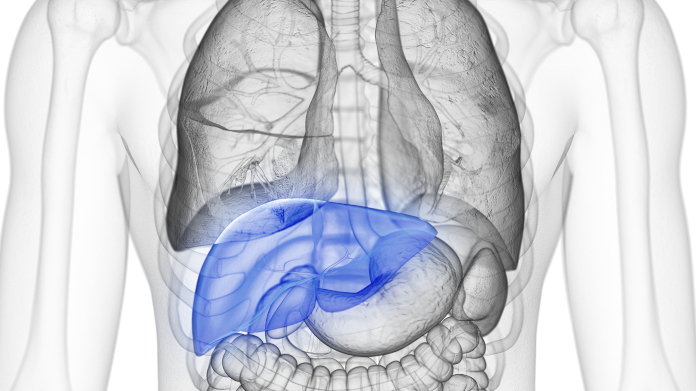
Located in the upper right-hand side of the abdomen, the liver is one of the most important organs in the human body.
A true centre of metabolic regulation, it governs more than 300 vital functions.
In particular, it transforms the nutrients we ingest, neutralises toxic substances (pollutants, drugs, etc.), synthesises the body's cholesterol (needed to produce bile and sex hormones) and regulates blood sugar levels (1).
Despite its many roles, the liver remains a fragile structure.
A diet too rich in sugars, regular alcohol consumption, a sedentary lifestyle and chronic oxidative stress are all factors likely to impair its proper functioning in the long term.
There has also been a steady and worrying rise in fatty liver disease (the excessive accumulation of fat in liver cells) in industrialised countries. It is estimated that it currently affects between 20% and 30% of the world's population (2).
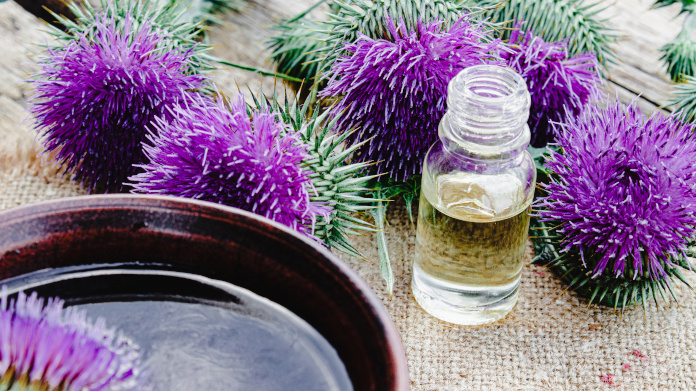
In response to these problems, food supplement manufacturers have long relied on antioxidants and plant extracts (milk thistle, artichoke, etc.) (3–4).
These products now dominate the market. While these natural solutions still have their place, an innovative alternative seems to be emerging. What is it called? Antrodia camphorata.
Antrodia camphorata: what are its supposed benefits for the liver?
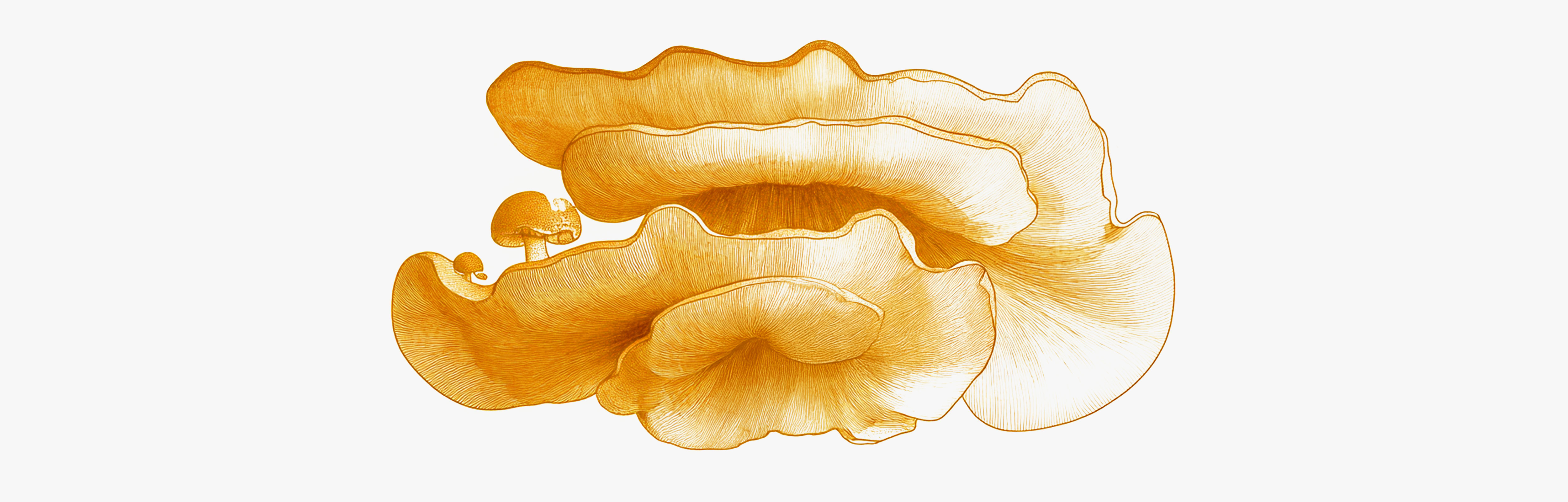
Antrodia camphorata is a rare mushroom that grows exclusively on the trunk of the Taiwanese camphor tree (Cinnamomum kanehirae), which grows in the island's primeval forests – hence its other name, camphorated mushroom.
It is irregular in appearance, with an orange to reddish-brown hue and a woody texture.
Long used in medicine, it was taken by indigenous peoples to relieve fatigue and treat hangovers.
Traditional Chinese medicine describes it as a purifier and liver regenerator.
It is only since the 1990s that scientific publications on the subject have multiplied, particularly regarding its potential hepatoprotective effect.
Biochemically speaking, the mycelium ofAntrodia camphorata concentrates many nutrients of interest, including more than 200 types of triterpenoid, polysaccharides, nucleic acids and superoxide dismutase (SOD) (5).
However, it is its antroquinonol content, a highly bioactive metabolite unique to it, that is most likely responsible for the wide range of its pharmacological effects (6).
In vitro and in vivo studies suggest that this mushroom acts jointly on multiple levels, including reducing hepatic oxidative stress by stimulating antioxidant enzymes, inhibiting certain pro-inflammatory mediators (TNF-α, IL-6...), regulating hepatic lipid metabolism and activating hepatocyte cell repair pathways (7-8).
Clinical studies attest to the effects of ProAntro®, an Antrodia extract, on liver health
ProAntro® is a fermented extract made from the mycelium of Antrodia camphorata and standardised to contain over 0.3% antroquinonol.
It has been the subject of two rigorous clinical studies (randomised, double-blind, placebo-controlled), confirming its ability to provide effective overall support for the liver.
At the end of the first study, the 40 subjects supplemented for 12 weeks with 300 mg of ProAntro® per day showed a significant reduction in ASAT (-20.7%) and ALAT (-26.2%) levels, two characteristic markers of liver inflammation.
This suggests a probable healing of liver damage and an improvement in liver function.
Their serum triglyceride levels also fell by 16.8%, indicating better management of hepatic fatty acids (which would help prevent excessive liver congestion) (9).
The second study showed a reduction in levels of acetaldehyde (-18.64%), a toxic metabolite produced by the breakdown of ethanol, which is particularly damaging to liver tissue.
This result suggests that Antrodia Camphorata may, to some extent, reduce the toxicity of alcohol to the liver (10).
In addition to these two studies, a 90-day clinical trial on humans demonstrated that it is completely harmless and safe to use.
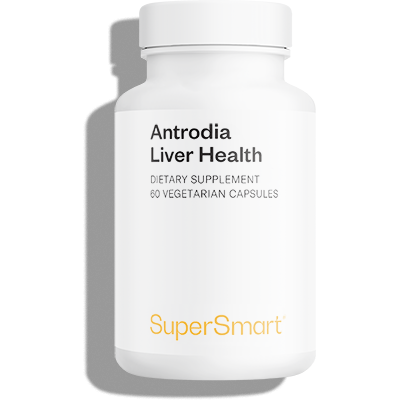
This is why some forward-thinking supplements have taken the plunge and included the ProAntro® compound at the heart of their formula (as in the case of Antrodia Liver Health, whose dosage of 300 mg/day is exactly in line with that used in the clinical studies).
SUPERSMART ADVICE
References
- Kalra A, Yetiskul E, Wehrle CJ, et al. Physiology, Liver. [Updated 2023 May 1]. In: StatPearls [Internet]. Treasure Island (FL): StatPearls Publishing; 2025 Jan-. Available from: https://www.ncbi.nlm.nih.gov/books/NBK535438/
- Sharma B, John S. Nonalcoholic Steatohepatitis (NASH) [Updated 2023 Apr 7]. In: StatPearls [Internet]. Treasure Island (FL): StatPearls Publishing; 2025 Jan-. Available from: https://www.ncbi.nlm.nih.gov/books/NBK470243/
- Mulrow C, Lawrence V, Jacobs B, et al. Milk Thistle: Effects on Liver Disease and Cirrhosis and Clinical Adverse Effects: Summary. 2000. In: AHRQ Evidence Report Summaries. Rockville (MD): Agency for Healthcare Research and Quality (US); 1998-2005. 21. Available from: https://www.ncbi.nlm.nih.gov/books/NBK11896/
- Panahi Y, Kianpour P, Mohtashami R, Atkin SL, Butler AE, Jafari R, Badeli R, Sahebkar A. Efficacy of artichoke leaf extract in non-alcoholic fatty liver disease: A pilot double-blind randomized controlled trial. Phytother Res. 2018 Jul;32(7):1382-1387. doi: 10.1002/ptr.6073. Epub 2018 Mar 9. PMID: 29520889.
- Geethangili M, Tzeng YM. Review of Pharmacological Effects of Antrodia camphorata and Its Bioactive Compounds. Evid Based Complement Alternat Med. 2011;2011:212641. doi: 10.1093/ecam/nep108. Epub 2011 Jan 3. PMID: 19687189; PMCID: PMC3095428.
- Kim U, Jang SI, Chen PN, Horii S, Wen WC. Hepatoprotective Effect of Antrodia camphorata Mycelium Powder on Alcohol-Induced Liver Damage. 2024 Oct 8;16(19):3406. doi: 10.3390/nu16193406. PMID: 39408373; PMCID: PMC11478381.
- Cao C, Zhong H, Chen Z, Song Z, Hu B, Wang X. Triterpene acid from Antrodia camphorata alleviates inflammation in acute liver injury. Aging (Albany NY). 2023 May 26;15(10):4524-4532. doi: 10.18632/aging.204757. Epub 2023 May 26. PMID: 37244283; PMCID: PMC10258030.
- Kuo YH, Lin CH, Shih CC. Dehydroeburicoic Acid from Antrodia camphorata Prevents the Diabetic and Dyslipidemic State via Modulation of Glucose Transporter 4, Peroxisome Proliferator-Activated Receptor α Expression and AMP-Activated Protein Kinase Phosphorylation in High-Fat-Fed Mice. Int J Mol Sci. 2016 Jun 3;17(6):872. doi: 10.3390/ijms17060872. PMID: 27271603; PMCID: PMC4926406.
- Yen YT, Park JH, Kang SH, Su T, Cheng H, Wen WC, Lin SS, Tai YL, Chen PN, Tsai SC. Clinical Benefits of Golden-Antrodia Camphorata Containing Antroquinonol in Liver Protection and Liver Fat Reduction After Alcoholic Hepatitis. Front Pharmacol. 2022 Jun 21;13:757494. doi: 10.3389/fphar.2022.757494. PMID: 35800453; PMCID: PMC9253287.
- Yen YT, Park JH, Kang SH, Su T, Cheng H, Wen WC, Lin SS, Tai YL, Chen PN, Tsai SC. Clinical Benefits of Golden-Antrodia Camphorata Containing Antroquinonol in Liver Protection and Liver Fat Reduction After Alcoholic Hepatitis. Front Pharmacol. 2022 Jun 21;13:757494. doi: 10.3389/fphar.2022.757494. PMID: 35800453; PMCID: PMC9253287.
Keywords


88 Days
Fast delivery
Fast delivery, no hassle
Trusted
92 Days
Great product
Great product, quick delivery
Jamal
95 Days
Very good helps me everytime
Very good helps me everytime
TAMMINEN Liis
97 Days
it helps a lot on digestion
it helps a lot on digestion
Elisa Fleury
103 Days
Super fast delivery
Super fast delivery. Trying flexismart at the moment, Maybe a bit too soon to see results bit nice tolérance so far.
Maria Angeles Verdu
103 Days
Good service
Supersmart are an efficient company - the order arrived quickly. This is usual for them, though they have occasionally been let down by delivery firms - not a surprise and not their fault.
Barry Humphries
104 Days
Excellent product
Excellent product, quick delivery
FERENCNE Soros
106 Days
High quality, reliable service!
I have been ordering their products for years! They are excellent quality. And despite the international shipping, my order allways arrived pretty fast. The loyalty program is very fair, I get great prices on the products. Imagine: my specialists are asking me what have I been taking that my counts are so good!
Petra Hruskova
107 Days
I purchased Melatonin
I purchased Melatonin, very quick delivery to the UK and product is perfect. Very Happy
Dean Harriss
109 Days
Avis général
Well boxes are white but that puts a bit of serious color for my grey matter. Supersmart is quality products and made myself a pharmacy. Honestly should be remboursed by the health institutes selling pills
LEBORDAIS Thomas
110 Days
Arrives in just five days even to Japan…
Arrives in just five days even to Japan – that’s insanely fast! Amazing lineup of innovative products.
namio
113 Days
Quality and choice of supplements.
Quality and choice of supplements.
Maja
117 Days
perfect great
perfect great
igor janic
122 Days
Good products and speedy delivery
Good products and speedy delivery
Jim
126 Days
Very good
Very good, fast delivery
Paddy
of experience
your money back
##montant## purchase