
Which foods should you avoid in the case of anaemia?
If you’re experiencing intense fatigue or looking paler than usual, you could well be suffering from anaemia. But don’t panic – here, we explore the foods you should avoid and other options for fighting anaemia.


What exactly is anaemia and what are its symptoms?
Anaemia is a medical condition characterised by a deficit of red blood cells or haemoglobin within them, leading to insufficient oxygen in the body.
The most common cause of anaemia is a a lack of iron or vitamin B12. Iron plays an essential role in the production of haemoglobin, a protein present in red blood cells, which transports oxygen from the lungs to all the body’s cells. B12 is essential for the production of DNA in the cells responsible for red blood cell formation.
Other factors, such as chronic diseases, genetic disorders or significant blood loss, can all cause anaemia.
Symptoms vary but usually include fatigue, weakness and pallor, as well as breathlessness, dizziness and a rapid or irregular heart rate. In more severe cases, anaemia can also cause chest pains, headaches and difficulty concentrating.
If you’re experiencing any such symptoms, it’s important to consult a health professional. He or she will be able to give you a precise diagnosis and recommend the appropriate treatment, which can range from dietary changes to supplementation with iron or vitamins, and even a blood transfusion in the most serious cases.
What types of iron are found in the diet?
First and foremost, we need to distinguish between the two types of iron present in our diet: haem and non-haem.
Haem iron is associated with proteins such as haemoglobin and is only found in animal-source foods. It’s the form most easily-absorbed by the body, with an absorption rate of between 15% and 35%(1).
Non-haem iron is found in a wide range of foods both animal- and plant-source. However, only 2%-20% of non-haem iron is absorbed by the body (2).
Which foods should be avoided in the case of anaemia?
Nutrition is hugely important in treating anaemia, so it’s essential to know which foods can hinder the recovery process.
To make this easier, we’ve listed the foods below which are best avoided:
Foods high in calcium when eaten alongside those high in iron: calcium is a mineral that can impede the body’s ability to process iron when the two are ingested at the same time. Studies have shown that consuming a meal containing 300mg–600mg of calcium can actually reduce iron absorption by 40%-50% (3-4).
Anaemic individuals should therefore take particular care when eating a meal containing calcium-rich foods such as cheese, milk and yogurt as well as sardines and tofu. These foods can, however, be eaten between meals. .
Foods with a high tannin content, when also eating iron-rich foods: ubiquitous in our daily diet, in tea, coffee, wine and dark chocolate for example, tannins are polyphenols which also interfere with the body’s iron absorption, thus reducing its bioavailability(5).
Research suggests that regular consumption of tannins has no long-term effects on iron levels as part of a healthy diet (6). But it’s advisable to avoid consuming tannin-rich foods close to meals in order to optimise iron uptake (7).
It should also be noted that tannins mainly affect non-haem iron from plant sources, rather than animal-source haem iron (8).
It’s also best to limit your intake of phytate-rich foods. Naturally-present in seeds, phytates are a form of phosphorus found in almost all edible plants such as grains, oilseeds and pulses including lentils, beans, chickpeas and soya.
Consuming phytates inhibits the bioavailability of iron in the diet. One study showed that 5mg-10mg of phytate phosphorus added to wheat bread containing 3mg of iron halved the absorption of that iron (9).
Which foods should you focus on if you have anaemia?
Combatting anaemia also means following a diet that prioritises certain foods.
Iron-rich foods include offal, such as black pudding (22mg/100g), pig’s liver (18mg/100g) and lamb kidneys (12.2mg /100g), as well as red meat in general.
Bear in mind though, that consuming too much red meat is not recommended, as it can increase the risk of cardiovascular disease and some types of cancer (10).
It’s therefore best to vary your iron sources, by eating fish such as raw anchovies (5.1mg), sardines in olive oil (3.3mg) or raw sea bass (2.2 mg). Other options include seafood such as octopus (2.32mg/100 g) or mussels (6.7mg/100 g).
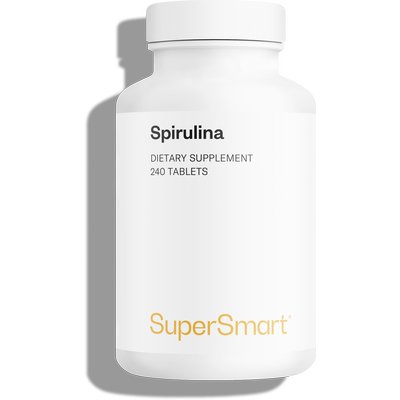
It’s also a good idea to include foods like sea lettuce (79mg/100g) and spirulina (28.5mg/100g), both of which have a high iron content.
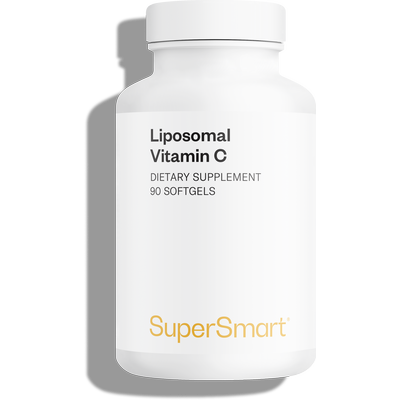
Add to this, supplementation with vitamin C, which is a powerful activator of iron absorption and even has the potential to reverse the inhibitory effect of the above-mentioned substances (calcium, tannins, phosphate). Diet-wise, you can find vitamin C in kiwi fruit and oranges, or add a little parsley to your dishes (11).
The cooking method used can also affect a food’s iron content. Steaming or cooking at low temperature, for example, helps to maximise the preservation of a food’s nutrients including its iron content (12).
Which supplements should you choose to help fight anaemia?
It’s essential to have a blood test before considering iron supplementation. Excess iron in the body can be harmful to health and may damage several organs (the liver, brain, joints, etc).
But once iron deficiency has been clearly identified, you can you explore safe and effective iron supplements.
Be aware, however, that not all forms of iron are the same. Compounds such as ferrous sulphate, iron citrate or iron D-gluconate can cause adverse effects like stomach problems (13).
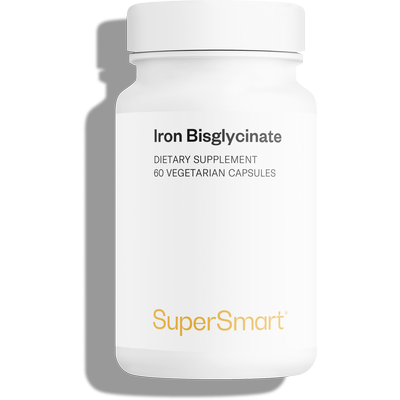
Conversely, ferrous bisglycinate (try the product Iron Bisglycinate) is very well-tolerated and offers optimal bioavailability (14). This is because it has a low molecular weight and no ion charge, thus reducing interactions with other nutrients.
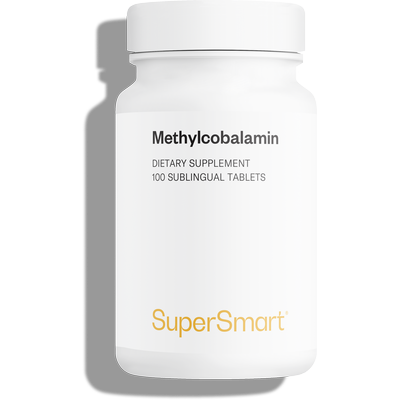
Remember too, the importance of vitamin B12 (if you need to supplement, opt for methylcobalamin, the most bioavailable form of B12).
Note that anaemia can also be caused by a lack of folate (another name for vitamin B9), an important vitamin for cell production including blood cells. Folate deficiency can occur for various reasons including malnutrition, pregnancy, the use of cytotoxic drugs ...
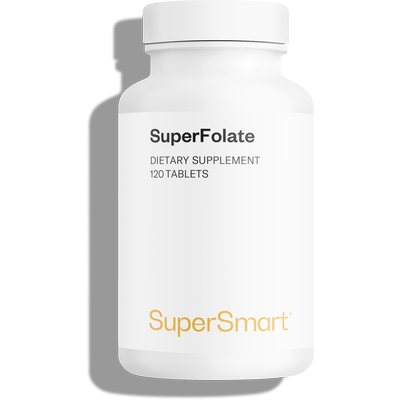
In such cases, and under medical supervision, targeted supplementation can be initiated (with, for example, SuperFolate).
SUPERSMART ADVICE
References
- Biochemistry, Iron Absorption, Thomas Ems; Kayla St Lucia; Martin R. Huecker. (2017)
- Anémie : prévention et stratégies alimentaires, KL Becker, Encyclopédie de l'alimentation et de la santé (2016)
- Hallberg L, Brune M, Erlandsson M, Sandberg AS, Rossander-Hultén L. Calcium: effect of different amounts on nonheme- and heme-iron absorption in humans. Am J Clin Nutr. 1991 Jan;53(1):112-9. doi: 10.1093/ajcn/53.1.112. PMID: 1984335.
- JD Cook, SA Dassenko, P Whittaker, Calcium supplementation: effect on iron absorption, The American Journal of Clinical Nutrition, Volume 53, Issue 1, 1991,Pages 106-111, ISSN 0002-9165,
- Brune M, Rossander L, Hallberg L. Iron absorption and phenolic compounds: importance of different phenolic structures. Eur J Clin Nutr. 1989 Aug;43(8):547-57. PMID: 2598894.
- Mennen, L., Hirvonen, T., Arnault, N. et al. Consumption of black, green and herbal tea and iron status in French adults. Eur J Clin Nutr 61, 1174–1179 (2007).
- Morck TA, Lynch SR, Cook JD. Inhibition of food iron absorption by coffee. Am J Clin Nutr. 1983 Mar;37(3):416-20. doi: 10.1093/ajcn/37.3.416. PMID: 6402915.
- Astill C, Birch MR, Dacombe C, Humphrey PG, Martin PT (2001). Factors affecting the caffeine and polyphenol contents of black and green tea infusions. J Agric Food Chem 49, 5340–5347.
- Hallberg L. Wheat fiber, phytates and iron absorption. Scand J Gastroenterol Suppl. 1987;129:73-9. doi: 10.3109/00365528709095855. PMID: 2820048.
- Battaglia Richi E, Baumer B, Conrad B, Darioli R, Schmid A, Keller U. Health Risks Associated with Meat Consumption: A Review of Epidemiological Studies. Int J Vitam Nutr Res. 2015;85(1-2):70-8. doi: 10.1024/0300-9831/a000224. PMID: 26780279.
- Lynch SR, Cook JD. Interaction of vitamin C and iron. Ann N Y Acad Sci. 1980;355:32-44. doi: 10.1111/j.1749-6632.1980.tb21325.x. PMID: 6940487.
- Sharma S, Khandelwal R, Yadav K, Ramaswamy G, Vohra K. Effect of cooking food in iron-containing cookware on increase in blood hemoglobin level and iron content of the food: A systematic review. Nepal J Epidemiol. 2021 Jun 30;11(2):994-1005. doi: 10.3126/nje.v11i2.36682. PMID: 34290890; PMCID: PMC8266402.
- Tolkien Z, Stecher L, Mander AP, Pereira DI, Powell JJ. Ferrous sulfate supplementation causes significant gastrointestinal side-effects in adults: a systematic review and meta-analysis. PLoS One. 2015 Feb 20;10(2):e0117383. doi: 10.1371/journal.pone.0117383. PMID: 25700159; PMCID: PMC4336293.
- Name JJ, Vasconcelos AR, Valzachi Rocha Maluf MC. Iron Bisglycinate Chelate and Polymaltose Iron for the Treatment of Iron Deficiency Anemia: A Pilot Randomized Trial. Curr Pediatr Rev. 2018;14(4):261-268. doi: 10.2174/1573396314666181002170040. PMID: 30280670; PMCID: PMC6416187.
Keywords




88 Days
Fast delivery
Fast delivery, no hassle
Trusted
92 Days
Great product
Great product, quick delivery
Jamal
95 Days
Very good helps me everytime
Very good helps me everytime
TAMMINEN Liis
97 Days
it helps a lot on digestion
it helps a lot on digestion
Elisa Fleury
103 Days
Super fast delivery
Super fast delivery. Trying flexismart at the moment, Maybe a bit too soon to see results bit nice tolérance so far.
Maria Angeles Verdu
103 Days
Good service
Supersmart are an efficient company - the order arrived quickly. This is usual for them, though they have occasionally been let down by delivery firms - not a surprise and not their fault.
Barry Humphries
104 Days
Excellent product
Excellent product, quick delivery
FERENCNE Soros
106 Days
High quality, reliable service!
I have been ordering their products for years! They are excellent quality. And despite the international shipping, my order allways arrived pretty fast. The loyalty program is very fair, I get great prices on the products. Imagine: my specialists are asking me what have I been taking that my counts are so good!
Petra Hruskova
107 Days
I purchased Melatonin
I purchased Melatonin, very quick delivery to the UK and product is perfect. Very Happy
Dean Harriss
109 Days
Avis général
Well boxes are white but that puts a bit of serious color for my grey matter. Supersmart is quality products and made myself a pharmacy. Honestly should be remboursed by the health institutes selling pills
LEBORDAIS Thomas
110 Days
Arrives in just five days even to Japan…
Arrives in just five days even to Japan – that’s insanely fast! Amazing lineup of innovative products.
namio
113 Days
Quality and choice of supplements.
Quality and choice of supplements.
Maja
117 Days
perfect great
perfect great
igor janic
122 Days
Good products and speedy delivery
Good products and speedy delivery
Jim
126 Days
Very good
Very good, fast delivery
Paddy
of experience
your money back
##montant## purchase