
Traditional Japanese medicine: principles and treatments
Though somewhat overshadowed by Chinese medicine, traditional Japanese or Kampo medicine has much to teach us. Here we explore its key principles and the plants that make up its pharmacopoeia.

Origins of traditional Japanese medicine
During the neolithic period, people believed that disease was caused by demonic spirits invading the body. At that time, the Japanese relied on shamans, who with their amulets, prayers and spell books, would try to exorcise the evil. It wasn’t until the 7th century BC that early migrants from Korea, Northern China and the Philippines brought with them the first rudiments of medical knowledge.
It was the growth in trade with China, and the influence of Chinese-Korean Buddhism, which really laid the foundations of traditional Japanese medicine from the 6th century onwards (1).
Initially co-opting all the principles of Chinese medicine, Kampo (literally ‘medicine according to the Han method’) gradually found its own identity at the end of the Tang dynasty around 907. The main differences were a more practical approach, diagnosis based on conjunction of symptoms, and natural remedies made from local plants (2).
Key principles of Kampo
Kampo medicine adopts a holistic approach, in which the person is considered as a whole. With the mind and body believed to form an inseparable entity, in perpetual interaction with the surrounding environment, a state of balance must be constantly maintained.
Unsurprisingly, Japanese medicine is underpinned by some of the foundations of its Chinese counterpart:
- Ki (equivalent to Chinese Qi) corresponds to the life force flowing throughout the body and its fluidity (3);
- In and Yo (the Japanese version of Yin and Yang) represent the duality present in all elements of the universe (4);
- the five element theory is predicated on the belief that each organ, limb or emotion can be described as a combination of metal, wood, water, fire or earth (5).
The importance of touch in Japanese medicine
Palpation of the body occupies a key place in Japanese medicine (6). It enables areas of emptiness (Kyo) and fullness (Jitsu), both signs of energy imbalance, to be identified. Various touch-based practices, based on the art of Chinese medicine, have thus been absorbed into the Japanese tradition.
Acupuncture is a key feature, although practitioners use finer needles which are inserted painlessly via a tube called a Shinkan. Developed largely during the Ming dynasty in China, moxibustion is a form of heat therapy in which moxa, made from dried mugwort (yomogi) is burned near the skin at different points in the body (7). There are various approaches including Okyu (rice grain moxibustion), Kyutoshin (needle moxa), Chinetsukyu (cones) and Bokyu (stick moxa) all of which have their own therapeutic indications.
Adopted by the Japanese over 1000 years ago, traditional amma massage (‘calming with the hands’) aims to encourage the free flow of Ki throughout the body, from the centre out to the extremities (8). It’s based on a series of complex manipulations (kata) consisting of stretching, rocking, pressing and percussive movements, applied to 360 specific points. It was also the inspiration behind shiatsu, later formalised in the early 20th century (9).
Medical specialities of Japanese medicine
The 30-volume work Ishinpo, by the physician Tanba Yasuyori (912-995), is a comprehensive compilation of Chinese medical knowledge at that time, transcribed into Japanese (10). Even then, medicine was divided into specialities such as internal medicine, dermatology, otolaryngology, surgery, pharmacology, gynaecology, obstetrics and paediatrics. The tome even addresses sexual behaviour and health regimes.
Ophthalmology developed significantly with the arrival of the Buddhist monk Majima Seigan. Bringing together renowned practitioners, he established a school for treating eye problems. The use of eye drops and eye surgery grew (11). His text Majima ryū ganmoku hiden shō was the first work on the subject to be published in Japan.
During the Muromachi period, a series of bloody wars decimated the Japanese population. In order to treat wounds and mutilations on the battlefield, educated fighters became specialist ‘field surgeons’ or kinsō-i, as opposed to the more general ‘boil or furuncle surgeons’ (yōka) who treated civilians. Though ‘invading’ the body’s secrets in this way was considered dirty and impure, they nevertheless made remarkable progress in expanding their knowledge of anatomy and mastering the suturing of wounds.
The Japanese pharmacopoeia
Kampo developed remedies (kampo yaku) by combining elements of nature endowed with medicinal properties (shoh yaku). This could be parts of plants (roots, flowers, fruits, bark, seeds …), minerals or animal substances (skin, bone, shell …), the idea being to treat all symptoms at the same time (instead of addressing each symptom separately) by considering the patient as a whole.
The most popular such shoh yaku include liquorice root (kanzo), a true Asian medicine panacea, ginger (syokkyoh) for its warming properties, and kudzu (kakkon) for regulating the menstrual cycle (12-14). And for improving the flow of Ki, magnolia bark is included in a host of preparations (15).
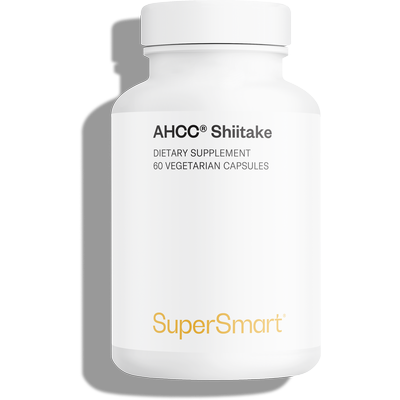
Mushrooms also feature prominently. Known as the ‘mushroom of immortality’, reishi is a Ki tonic which supports healthy immune function and circulation (16). Since the time of Emperor Chūai, the mycelium of shiitake has been traditionally used to combat physical and mental exhaustion due to its content of alpha-glucan polysaccharides (AHCC) (17).
Modern-day Japan continues to innovate in the field of natural remedies, producing effective dietary supplements including certain ‘postbiotics’, black garlic, etc. (18).
SUPERSMART ADVICE


References
- Kuchta K, Cameron S. Editorial: Kampo Medicine in a Modern Context: Ethnopharmacological Perspectives. Front Pharmacol. 2022 Sep 2;13:971254. doi: 10.3389/fphar.2022.971254. PMID: 36120328; PMCID: PMC9480492.
- Iwase S, Yamaguchi T, Miyaji T, Terawaki K, Inui A, Uezono Y. The clinical use of Kampo medicines (traditional Japanese herbal treatments) for controlling cancer patients' symptoms in Japan: a national cross-sectional survey. BMC Complement Altern Med. 2012 Nov 20;12:222. doi: 10.1186/1472-6882-12-222. PMID: 23167528; PMCID: PMC3537749.
- Watanabe K, Matsuura K, Gao P, Hottenbacher L, Tokunaga H, Nishimura K, Imazu Y, Reissenweber H, Witt CM. Traditional Japanese Kampo Medicine: Clinical Research between Modernity and Traditional Medicine-The State of Research and Methodological Suggestions for the Future. Evid Based Complement Alternat Med. 2011;2011:513842. doi: 10.1093/ecam/neq067. Epub 2011 Feb 17. PMID: 21687585; PMCID: PMC3114407.
- Hottenbacher L, Weißhuhn TE, Watanabe K, Seki T, Ostermann J, Witt CM. Opinions on Kampo and reasons for using it--results from a cross-sectional survey in three Japanese clinics. BMC Complement Altern Med. 2013 May 16;13:108. doi: 10.1186/1472-6882-13-108. PMID: 23680097; PMCID: PMC3669030.
- Minagawa T, Ishizuka O. Status of urological Kampo medicine: a narrative review and future vision. Int J Urol. 2015 Mar;22(3):254-63. doi: 10.1111/iju.12685. Epub 2015 Jan 18. PMID: 25597936.
- Yakubo S, Baba M, Odaguchi H, Wakasugi A, Sekine M, Hanawa T, Mitsuma T, Namiki T, Arai M, Muramatsu SI, Shimada Y, Shibahara N. Kampo Formula-Pattern Models: The Development of 13 New Clinically Useful Standard Abdominal Pattern Models in the Fukushin Simulator. Front Pharmacol. 2022 Apr 29;13:688074. doi: 10.3389/fphar.2022.688074. PMID: 35571074; PMCID: PMC9106283.
- Yakubo S, Ito M, Ueda Y, Okamoto H, Kimura Y, Amano Y, Togo T, Adachi H, Mitsuma T, Watanabe K. Pattern classification in kampo medicine. Evid Based Complement Alternat Med. 2014;2014:535146. doi: 10.1155/2014/535146. Epub 2014 Feb 20. PMID: 24701241; PMCID: PMC3950553.
- Ishizaki N, Yano T, Kawakita K. Public status and prevalence of acupuncture in Japan. Evid Based Complement Alternat Med. 2010 Dec;7(4):493-500. doi: 10.1093/ecam/nen037. Epub 2008 Jun 19. PMID: 18955345; PMCID: PMC2892353.
- Robinson N, Lorenc A, Liao X. The evidence for Shiatsu: a systematic review of Shiatsu and acupressure. BMC Complement Altern Med. 2011 Oct 7;11:88. doi: 10.1186/1472-6882-11-88. PMID: 21982157; PMCID: PMC3200172.
- Mayanagi M, Shen S. [A study on "Kyō gige" or "Jing Yijie" mentioned in the Ishinpō]. Nihon Ishigaku Zasshi. 1996 Sep;42(3):349-68. Japanese. PMID: 11619316.
- Takayama S, Shiga Y, Kokubun T, Konno H, Himori N, Ryu M, Numata T, Kaneko S, Kuroda H, Tanaka J, Kanemura S, Ishii T, Yaegashi N, Nakazawa T. The traditional kampo medicine tokishakuyakusan increases ocular blood flow in healthy subjects. Evid Based Complement Alternat Med. 2014;2014:586857. doi: 10.1155/2014/586857. Epub 2014 Apr 24. PMID: 24872835; PMCID: PMC4020465.
- Veilleux MP, Moriyama S, Yoshioka M, Hinode D, Grenier D. A Review of Evidence for a Therapeutic Application of Traditional Japanese Kampo Medicine for Oral Diseases/Disorders. Medicines (Basel). 2018 Apr 18;5(2):35. doi: 10.3390/medicines5020035. PMID: 29670027; PMCID: PMC6023475.
- Nose M, Tada M, Kojima R, Nagata K, Hisaka S, Masada S, Homma M, Hakamatsuka T. Comparison of glycyrrhizin content in 25 major kinds of Kampo extracts containing Glycyrrhizae Radix used clinically in Japan. J Nat Med. 2017 Oct;71(4):711-722. doi: 10.1007/s11418-017-1101-x. Epub 2017 Jun 12. Erratum in: J Nat Med. 2018 Mar 1;: PMID: 28608269; PMCID: PMC5897458.
- Bihlet AR, Byrjalsen I, Andersen JR, Simonsen SF, Mundbjerg K, Helmer B, Riis BJ, Karsdal MA, Christiansen C. The Efficacy and Safety of Multiple Dose Regimens of Kudzu (Pueraria lobata) Root Extract on Bone and Cartilage Turnover and Menopausal Symptoms. Front Pharmacol. 2021 Oct 22;12:760629. doi: 10.3389/fphar.2021.760629. PMID: 34744740; PMCID: PMC8568880.
- Poivre M, Duez P. Biological activity and toxicity of the Chinese herb Magnolia officinalis Rehder & E. Wilson (Houpo) and its constituents. J Zhejiang Univ Sci B. 2017 Mar.;18(3):194-214. doi: 10.1631/jzus.B1600299. PMID: 28271656; PMCID: PMC5365644.
- Wachtel-Galor S, Yuen J, Buswell JA, et al. Ganoderma lucidum (Lingzhi or Reishi): A Medicinal Mushroom. In: Benzie IFF, Wachtel-Galor S, editors. Herbal Medicine: Biomolecular and Clinical Aspects. 2nd edition. Boca Raton (FL): CRC Press/Taylor & Francis; 2011. Chapter 9. Available from: https://www.ncbi.nlm.nih.gov/books/NBK92757/
- Dai X, Stanilka JM, Rowe CA, Esteves EA, Nieves C Jr, Spaiser SJ, Christman MC, Langkamp-Henken B, Percival SS. Consuming Lentinula edodes (Shiitake) Mushrooms Daily Improves Human Immunity: A Randomized Dietary Intervention in Healthy Young Adults. J Am Coll Nutr. 2015;34(6):478-87. doi: 10.1080/07315724.2014.950391. Epub 2015 Apr 11. PMID: 25866155.
- Ahmed T, Wang CK. Black Garlic and Its Bioactive Compounds on Human Health Diseases: A Review. 2021 Aug 19;26(16):5028. doi: 10.3390/molecules26165028. PMID: 34443625; PMCID: PMC8401630.



48 Days
Good products
Good products
Emmanuel
52 Days
Always great service coupled with the…
Always great service coupled with the best of products Olive and David
David Walsh
54 Days
Products with quality
Products truly help.
Sari
55 Days
Your delivery service in DK is not…
Your delivery service in DK is not giving option of pick up in package shop of my choice!
SZCZEPANSKI Christopher
56 Days
Always good products
Always good products. Thank you
Silke Wieczorek
58 Days
Swift delivery
Swift delivery - quality products
Trusted
58 Days
Incredible and quick service and…
Incredible and quick service and delivery. Thank you again for your assistance. Your products are really helpful!
Kazanti Kleopatra
60 Days
this is probably not the last time i'll…
this is probably not the last time i'll buy noopept, however i'm really thankful to y'all, omberacetam helped me a lot getting out of the drug spiral, now i can finally enjoy again the scent of a flower with actual pleasure
DE ROSA Luca
61 Days
top in europe
top in europe
GIGLIO LUCA
62 Days
Thank you for producing such important…
Thank you for producing such important and rare supplements!!! You're the only ones who can provide a solution when it's impossible to find elsewhere!!! Thank you for the quality of your products and your genuine interest in anti-aging, making them accessible to those interested in this field and wanting to help themselves!!!❤
Katerina Iyulskaya
64 Days
Great!
Great product,the delivery and also good quality products
KASINGA Rebecca
66 Days
It has good products
It has good products and delivery is prompt.
Roger De Backer
70 Days
Good seller..good products and good…
Good seller..good products and good delivery service.
Sam
71 Days
A wide selection and high-quality products
I order regularly and am always happy with the service
Maria Teresa Jannone
73 Days
Prompt delivery
Prompt delivery
Alan
of experience
your money back
##montant## purchase