
Three effective ways of reducing your risk of stroke
Stroke does not tend to be a chance occurrence: studies show that simple dietary measures can lower the risk by 80%.

If someone close to you has already had a stroke then you’ll know that it’s probably one of the worst things that can happen to you in life. Only 1 in 10 people make a full physical and mental recovery while the remainder suffer disabling effects and almost 40% die in the months that follow.
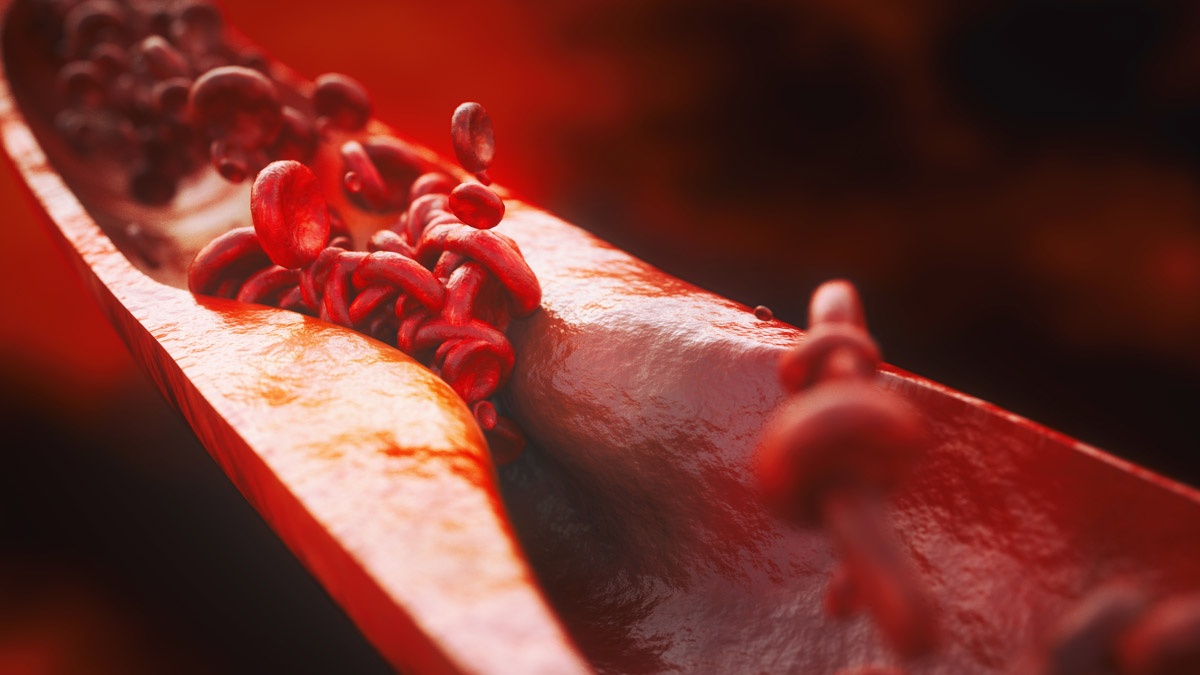
What’s worse is there are no early warning signs of the momentous event to come. It’s brutal and unpredictable. One day, a fatty plaque becomes detached from a blood vessel wall and gets quietly carried along in the bloodstream until it finally becomes stuck in a narrowed artery. That’s the moment everything gets turned upside down: the plaque’s obstruction of the vessel abruptly interrupts the blood supply with the result that thousands of nerve cells, which literally depend on this artery to survive, are deprived of oxygen.
If nothing is done in the hours that follow, the nerve cells die of asphyxia, eliminating a large part of the neuronal circuits responsible for complex functions such as tactile sensitivity, speech, balance … If the damage is not too great and the victim is still young, neuronal plasticity enables these circuits to be rebuilt, though it does take time. If not, which is more often the case, nothing is ever the same again.
The consequences of a stroke are truly frightening and it’s hardly surprising that most people don’t want to hear about them: they secretly hope that they’ll slip through the net. But by refusing to face reality, they put themselves at an unnecessarily increased risk. Stroke does not tend to be a chance occurrence: studies show that simple dietary measures can lower the risk by 80%.
Three dietary factors that reduce the risk
So if we know that there are a number of determinants which increase the likelihood of having a stroke such as physical inactivity, hypertension and type 2 diabetes, are there any factors which have the opposite, ie, positive, effect on risk?
There are at least three such factors which can be easily incorporated into your life and which also offer major benefits for many other diseases. A group of scientists reviewed almost 400 studies published over the last 30 years in order to ascertain the kind of diet that can best help prevent stroke (4). It seems there are three main steps which can help cut the risk of stroke by at least 80%.
Increasing potassium intake
This is without doubt the best way of reducing the risk of stroke. In 2017, this group of researchers from Birmingham University showed for the first time that low potassium intake promoted rigidity of arteries but that increasing its intake helped prevent the calcification process (5). Though potassium is found in almost all fruits and vegetables, the sharp decline in consumption of these foods has undoubtedly contributed to the huge rise in incidence of stroke … While requirements for potassium are estimated at 4700mg a day, it’s thought that actual intake in Western societies may barely reach 2300mg in women and 3100mg in men (6).
Foods rich in potassium: all fruits, vegetables and pulses, particularly white beans, pumpkin, spinach and bananas.
Potassium supplements: Potassium Bicarbonate (officially recognised for optimising and maintaining normal blood pressure)
A high magnesium diet
The second observation made by the researchers conducting the meta-analysis was that people with a high magnesium intake had a lower risk of stroke. The body needs this mineral to function properly. It is vital for cardiac function: it plays a direct role in the metabolism of fats and helps regulate blood pressure, two mechanisms involved in stroke. It is magnesium’s dilating effect on blood vessels which is probably its key benefit in reducing the risk of stroke.
Foods rich in magnesium: in general, pulses, seeds and nuts, and in particular, soya beans, almonds, spinach and chocolate.
Magnesium supplements: Magnesium Orotate (which contains eight different forms of magnesium) to be taken with food.
Vitamin B9 supplements
A more recent meta-analysis that looked specifically at stroke and cardiovascular problems showed that supplements of vitamin B9 (also called folate) reduce the risk of stroke by between 20% and 70%. This is hardly surprising: vitamin B9 (folate) supplements such as SuperFolate are already officially recognised for optimising and forming blood cells (8). Vitamin B9 is also found in meat and vegetables but levels are significantly depleted by cooking, storing and freezing.
References
- Sacco RL, Wolf PA, Gorelick PB. Risk factors and their management for stroke prevention: outlook for 1999 and beyond. Neurology 1999; 53 : S15–24.
- Ding EL, Mozaffarian D. Optimal dietary habits for the prevention of stroke. Semin Neurol. 2006 Feb;26(1):11-23. Review.
- Yong Sun, Chang Hyun Byon, Youfeng Yang, Wayne E. Bradley, Louis J. Dell’Italia, Paul W. Sanders, Anupam Agarwal, Hui Wu, Yabing Chen. Dietary potassium regulates vascular calcification and arterial stiffness. JCI Insight, 2017; 2 (19) DOI: 10.1172/jci.insight.94920
- Hajjar IM, Grim CE, et al. Impact of diet on blood pressure and age-related changes in blood pressure in the US population: analysis of NHANES III. Arch Intern Med. 2001;161(4):589-593.
- EFSA Opinion 2010;8(2):1469
- Sabatier M., Arnaud M.J., Kastenmayer P., Rytz A., Barclay D.V. Meal effect on magnesium bioavailability from mineral water in healthy women. Am. J. Clin. Nutr. 2002;75:65–71.
- Tian, T., Yang, K.-Q., Cui, J.-G., Zhou, L.-L., & Zhou, X.-L. (2017). Folic Acid Supplementation for Stroke Prevention in Patients With Cardiovascular Disease. The American Journal of the Medical Sciences, 354(4), 379–387. doi:10.1016/j.amjms.2017.05.020
Keywords




48 Days
Good products
Good products
Emmanuel
52 Days
Always great service coupled with the…
Always great service coupled with the best of products Olive and David
David Walsh
54 Days
Products with quality
Products truly help.
Sari
55 Days
Your delivery service in DK is not…
Your delivery service in DK is not giving option of pick up in package shop of my choice!
SZCZEPANSKI Christopher
56 Days
Always good products
Always good products. Thank you
Silke Wieczorek
58 Days
Swift delivery
Swift delivery - quality products
Trusted
58 Days
Incredible and quick service and…
Incredible and quick service and delivery. Thank you again for your assistance. Your products are really helpful!
Kazanti Kleopatra
59 Days
this is probably not the last time i'll…
this is probably not the last time i'll buy noopept, however i'm really thankful to y'all, omberacetam helped me a lot getting out of the drug spiral, now i can finally enjoy again the scent of a flower with actual pleasure
DE ROSA Luca
61 Days
top in europe
top in europe
GIGLIO LUCA
62 Days
Thank you for producing such important…
Thank you for producing such important and rare supplements!!! You're the only ones who can provide a solution when it's impossible to find elsewhere!!! Thank you for the quality of your products and your genuine interest in anti-aging, making them accessible to those interested in this field and wanting to help themselves!!!❤
Katerina Iyulskaya
64 Days
Great!
Great product,the delivery and also good quality products
KASINGA Rebecca
66 Days
It has good products
It has good products and delivery is prompt.
Roger De Backer
69 Days
Good seller..good products and good…
Good seller..good products and good delivery service.
Sam
71 Days
A wide selection and high-quality products
I order regularly and am always happy with the service
Maria Teresa Jannone
73 Days
Prompt delivery
Prompt delivery
Alan
of experience
your money back
##montant## purchase